
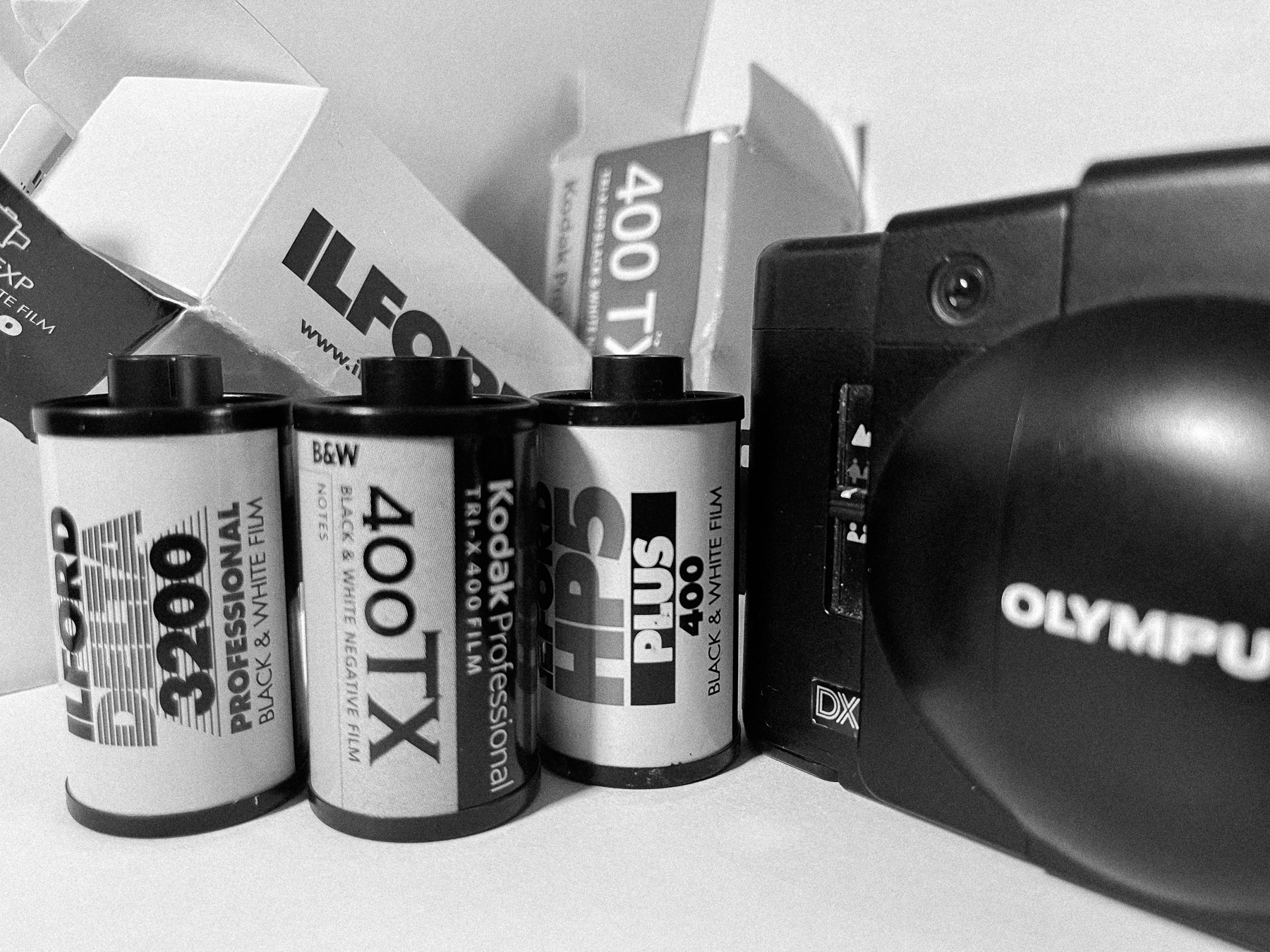
If you’re shooting black and white film in 2026, you’re doing it for the right reasons.
You’re not after perfection. You’re not trying to impress anyone on Instagram.
You’re in it for the weight, the grit, and the moments digital can’t fake.
But picking your first (or fifth) black and white film can feel like guessing what’s behind a locked pub door. Some will open to poetry. Some will open to a punch in the face.
Here’s what’s still worth loading and how to get the most out of it without making it more complicated than it needs to be.
Ilford HP5+ 400
HP5+ is the film equivalent of a well-worn leather jacket.
It’s forgiving. It’s sturdy. It makes you look more talented than you probably are.
Shoot it at box speed (400 ISO) and it’ll handle anything from drizzle to pub lighting.
Push it to 800, 1600, or even 3200 if you’re in a dark alley, it’ll get grainier, punchier, more alive.
Good for: Street photography, terrible weather, portraits of strangers who might not smile.
Kodak Tri-X 400
Tri-X is the classic for a reason.
It’s rougher around the edges than HP5+, sharper when you want it to be, and brilliant if you like your photos to feel like they might punch you in the stomach.
Push it hard. Abuse it. It’ll reward you with grain that feels like it belongs.
Good for: Gigs, protests, grey streets, raw portraits.
Ilford FP4+ 125
If HP5+ is your leather jacket, FP4+ is your pressed shirt.
Slower speed. Fine grain. Softer shadows.
Shoot it on bright days or indoors with proper lighting. Push it gently to 200 if you need, but really, let it breathe at 125 for best results.
Good for: Classic portraits, sun-battered landscapes, careful shooting.
Ilford Delta 3200
Don’t get caught up in the numbers -Delta 3200 is more like ISO 1000 in disguise.
But it’s still the best film for when the light’s gone, your hands are shaking, and you need a shot that actually shows up.
Expect a truckload of grain. Expect mood. Expect to stop caring about technical perfection.
Good for: Late-night pubs, rainy windows, empty streets at 2AM.
Kentmere 400
Kentmere doesn’t care about your dreams of magazine covers.
It’s cheap, honest, and absolutely perfect for stuffing into a camera when you’re learning, experimenting, or just skint.
Grain’s fine. Contrast is good enough (even better when shot at 400 but developed as 800). It does the job without asking for a standing ovation.
Good for: Practice, learning to trust your instincts, saving money for better beer.
If You’re Shooting Landscapes on Film
If you’re chasing foggy hills, stone walls, and trees bent by the wind, you’ll want a slower film.
Ilford Pan F Plus 50 is slow – painfully slow if you’re impatient, but rewards you with razor-sharp detail and creamy skies.
Stick it on a tripod. Take your time. Shoot when the clouds behave.
If you want budget smoothness, Fomapan 100 isn’t a bad shout either, a little moodier, a little less predictable, but solid.
Pushing and Pulling Without the Drama
Pushing film means lying to it about how much light there is.
Shoot a 400 film at 800, 1600, even 3200. It’ll get grainier, tougher, higher contrast, perfect if you like your photos loud and imperfect.
Pulling film is slowing it down.
Shoot a 400 film at 200 to soften things — less contrast, nicer tones, cleaner shadows.
Two rules:
1. If you push or pull, tell your lab. Otherwise, they’ll process it wrong, and your negatives will look like wet cardboard.
2. Don’t push slow films like FP4+ unless you really know what you’re doing. Some films like it rough. Some films fall apart.
The Final Word
Forget the gear heads arguing over grain structure.
Forget the YouTube reviews that sound like wine tastings.
Pick a film. Shoot it in bad weather and good. Screw up a few rolls. Get something real.
The beauty of black and white is that it doesn’t care about perfection.
It only cares about whether you turned up, framed the shot, and gave a damn.
Load up. Walk out. Find out.