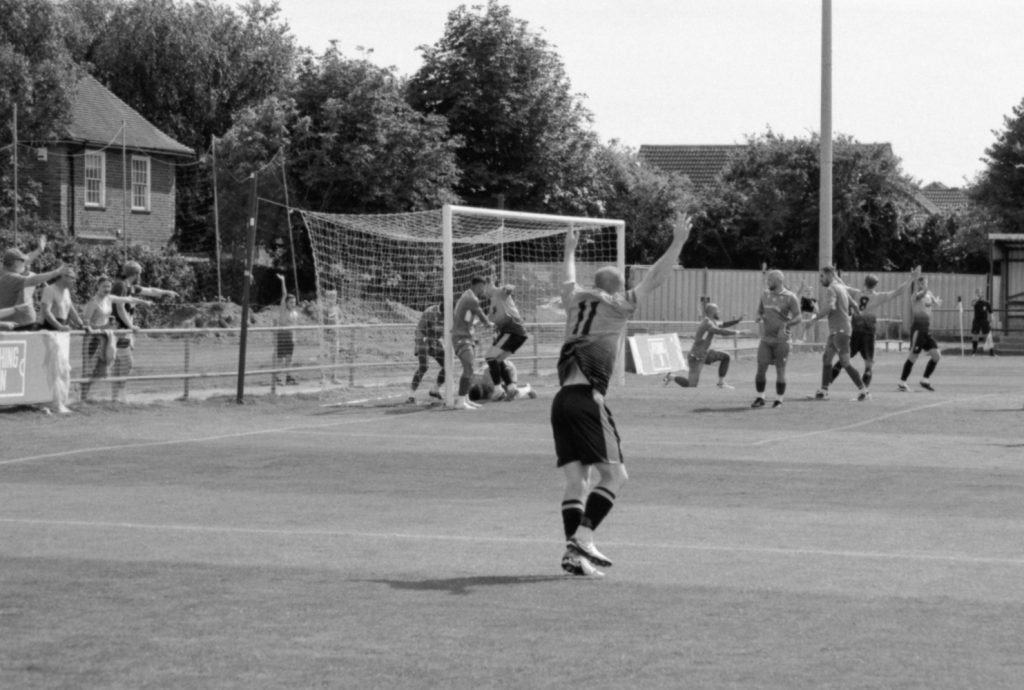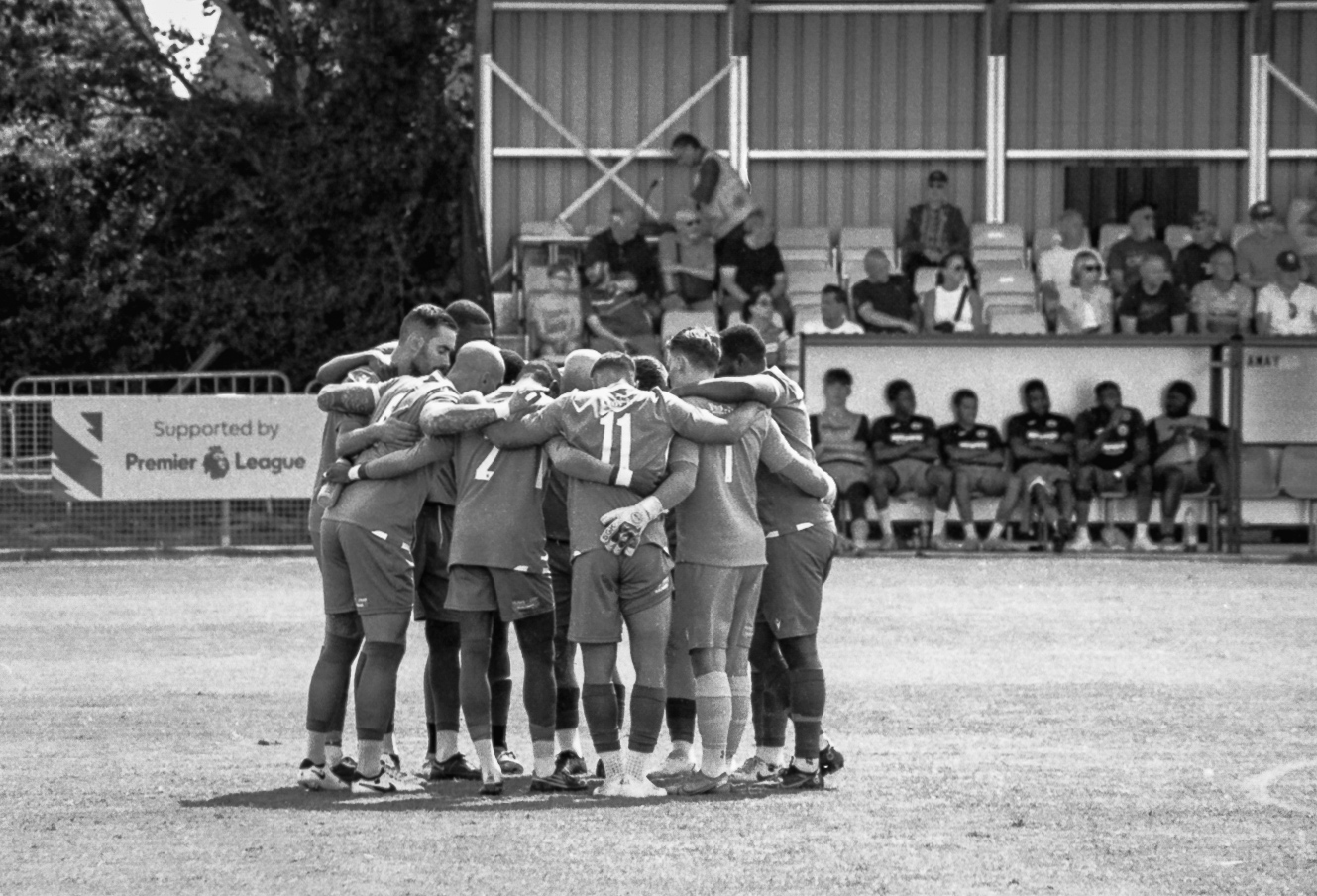
The FA Cup starts early. Not with pyrotechnics or glitzy coverage, but on quiet pitches tucked behind working men’s clubs and chain-link fences. It’s the oldest competition in football, a sacred institution of English sport. And for a while, I thought I’d capture every round of it – on black and white film.
It wasn’t about nostalgia. It was about honesty. A desire to slow things down. To shoot football in a way that isn’t done anymore: unpolished, imperfect, and maybe a bit braver for it.
A Different Kind of Project
I’ve always been drawn to timeless photographs. The kind that feel like they’ve existed longer than you have. So when I started thinking about the FA Cup, it made sense to reach for film. These were clubs that rarely see a crowd, let alone a photographer. It deserved something different – something respectful of its grit.
I’d had this project in the back of my mind for a while, but I always left it too late. The FA Cup kicks off absurdly early – most people don’t even know it’s begun until October. I wanted to do it right. This time, I started with the preliminary round.
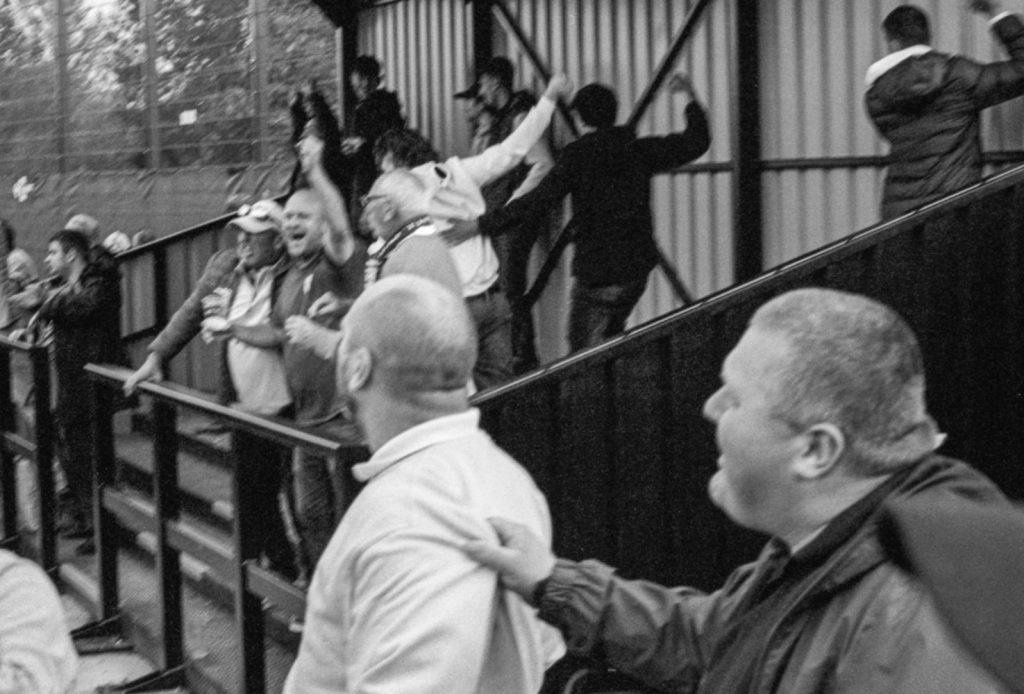
The Gear That Made It Happen
I kept it light. The OM-2N with the 50mm f/1.4 MC version did most of the work. A lovely lens – sharp, with character, and quick when I needed it to be. The OM-10 got both the 135mm f/3.5 and 200mm f/4 treatment, powered by a winder for when the pace of the match picked up.
The OM-1 with 28mm attached and XA3 lived in my bag – just in case. I didn’t use them much, but it was nice to have wide options when the scene called for more space.
Kodak Tri-X shot at 400. Delta 3200 pulled slightly to 1600. I started with colour (Ultramax, to be exact), but the images sat flat. Too polite. Black and white gets under the skin. Colour felt like documentation. Black and white felt like memory.
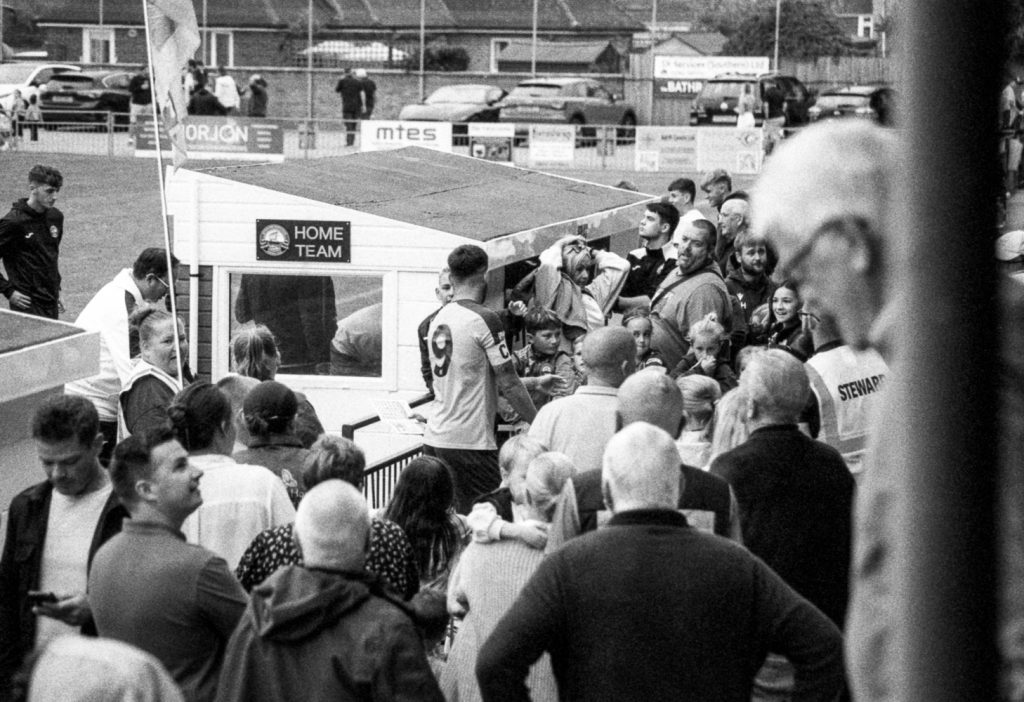
The Challenges of Film on the Touchline
Manual focus. If you know, you know. A ball doesn’t pause to let you nail your shot. You miss goals. You’re always chasing the ball, the play, the ref’s whistle. I had a 3-stop ND in the bag to keep my shutter fast and my aperture tight in the sun, but even then, exposure was a dance.
When the ball went to the other end of the pitch, my 200mm just wasn’t enough. I’d reposition, only to find a ball boy standing in front of me. At one point, I ran out of film as a team scored. I’ve never reloaded so quickly in my life.
Then there’s the access. Clubs were kind, many offered me free entry. I always paid. But most wouldn’t give me pitch-side or locker room access – understandable, but frustrating. I wanted stories. Profiles. The human moments. The things that make football more than sport.
What I Noticed
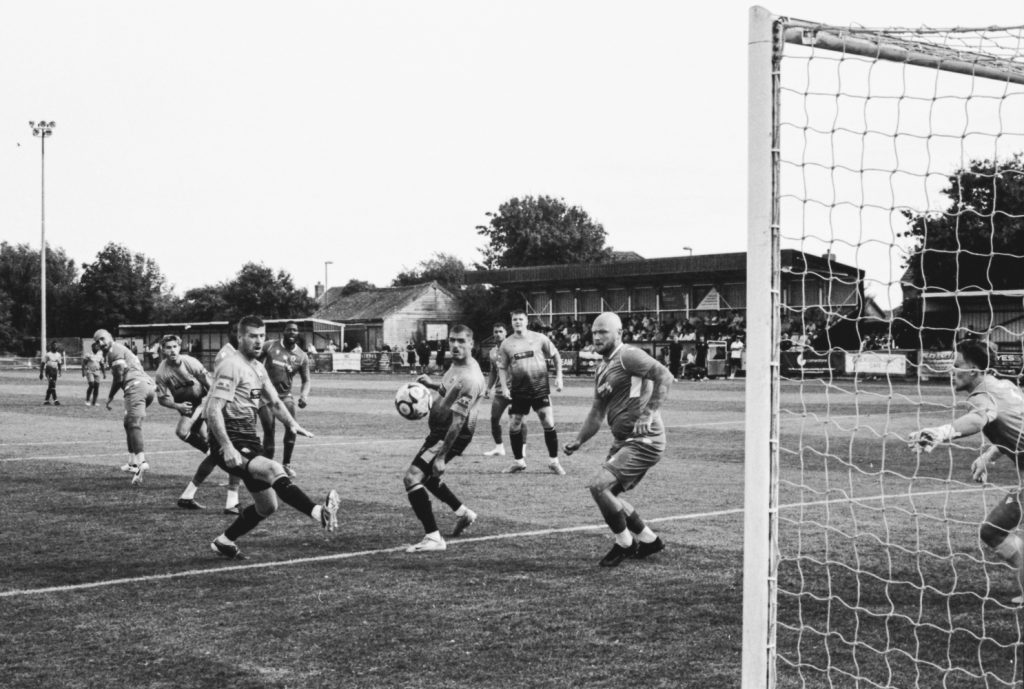
Grassroots football is raw. Not in a rough-around-the-edges way, but in the sense that there’s no buffer between you and the players. You hear every word. Every shout. Every complaint to the ref. You hear the crowd’s taunts – and some of them are harsh.
In a big stadium, all that’s washed out in the noise. Here, it’s personal. It adds drama. Every missed tackle, every late goal, it feels heavier.
Reflections and Regrets
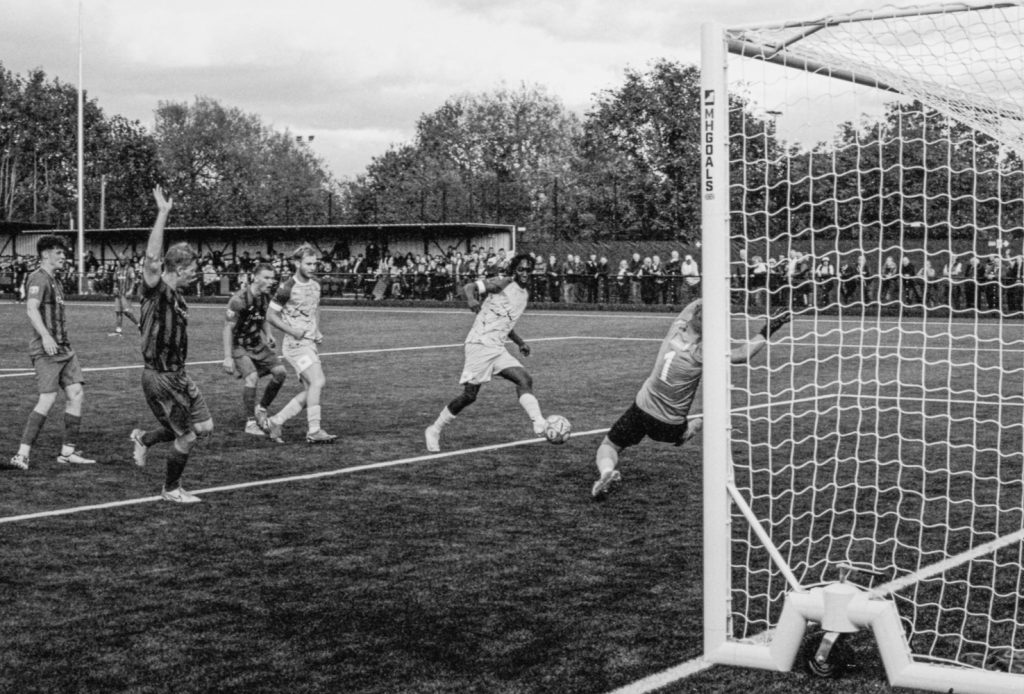
Looking back now, there are things I wish I’d done differently. I should have experimented more. Plonked the camera on a tripod, used a 10-stop ND and let the shutter drag through movement. Captured time instead of freezing it.
I wish I slowed down.
I wish I got closer.
But maybe those are lessons for next time. The project isn’t complete. I missed a round due to illness, and it gutted me. I knew then and there I’d failed on the original goal. But it still matters. The experience still shaped me as a photographer.
Final Thoughts
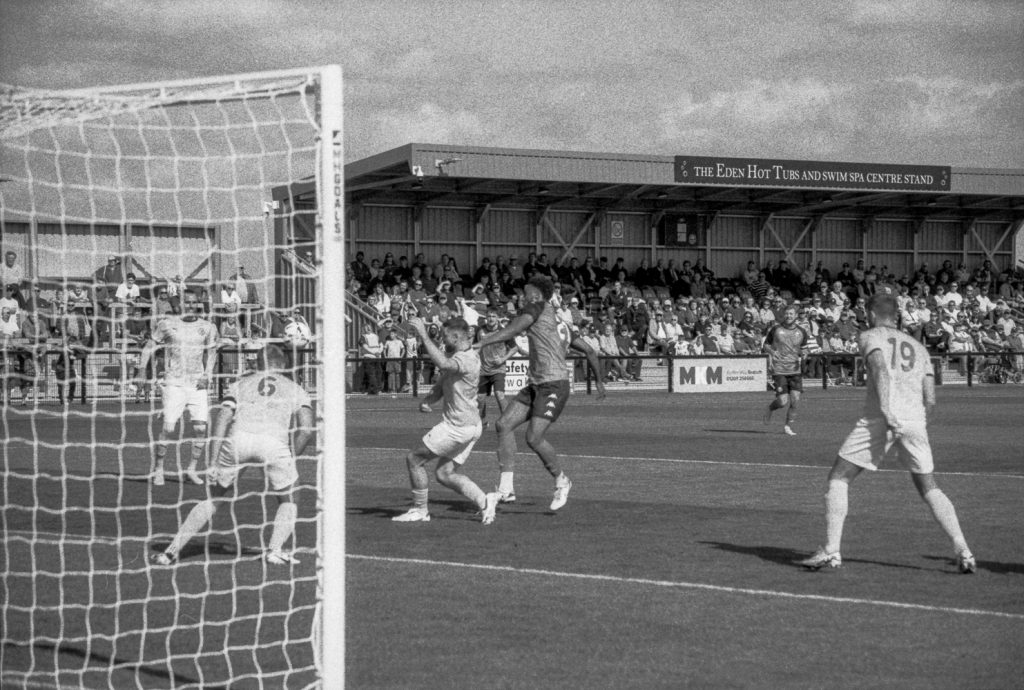
Film won’t win awards for convenience. It won’t land you a back-page spread or a viral Instagram post. But it’ll give you something real. And that’s what I wanted.
I may try again next year. Maybe I’ll finish it. Maybe I won’t. But I’ll keep trying to see football differently. And I’ll keep using film to do it.
Because when it works, it really works.