
How shooting in small sequences helps beginners get better, faster – and why it’s the secret weapon of every confident OM shooter.
Most beginners shoot film like this:
See something > lift camera > take one frame > move on.
It feels efficient.
Minimal.
Film-pure.
But it’s not how great photographers work.
Professionals – whether film or digital – almost never take one frame.
They shoot three.
Not thirty.
Not a rapid-fire burst.
Just three.
This is the Rule of Three, and it’s one of the fastest ways for beginners to improve their film results.
What Is the Rule of Three?
Simple:
Whenever you take a photo you care about, shoot three variations before you move on.
Just three.
Same subject, same moment,
but slightly different:
- composition
- angle
- distance
- framing
- exposure
- aperture
Three frames = three chances to get it right.
Why Three Shots Work (The Five Big Reasons)
1. The first frame is awareness
You’ve seen something interesting.
The first frame is instinct – the must capture this moment.
It’s rarely the best one.
2. The second frame is correction
Now you refine:
- Is the light falling better from another angle?
- Should I step closer?
- Should I crouch?
- Should I lift the camera?
The second frame is usually the true shot.
3. The third frame is intention
By frame three:
- you breathed
- you stabilised
- your focus is more precise
- your metering is more deliberate
- the composition is cleaner
This frame often becomes the keeper.
4. Three frames teach you the scene
Shooting a single frame teaches you nothing.
Shooting three:
- shows how light changes with angle
- reveals how background affects a subject
- trains your eye much faster
- forces conscious decisions instead of autopilot
You learn more from one sequence of three than from ten isolated snapshots.
5. Three frames prevent heartbreak
Film is slow.
Light changes.
Focus slips.
Shutter speeds dip too low.
Momentary movement ruins sharpness.
One frame is a gamble.
Three frames is insurance.
How to Use the Rule of Three
Step 1: Take the first frame
Don’t think – react.
Step 2: Move your feet
Change angle or height.
Fix an obvious flaw in the first shot.
Step 3: Refine composition
Bring attention to the subject.
Clean the background.
Adjust exposure by ½ stop if needed.
That’s your trio.
When to Use the Rule of Three
Use it whenever the scene is:
- important
- interesting
- emotional
- beautiful
- fleeting
- unusual
- something you don’t want to regret
Don’t waste it on test shots.
Use it for moments that matter.
Why Three – Not Five, Not Ten?
Film is limited.
You want discipline, not waste.
Three is:
- enough to improve the image
- enough to correct mistakes
- enough to learn the scene
- not enough to burn through the roll
It’s the perfect balance between intention and restraint.
This Isn’t a Beginner Trick – It’s How Professionals Work
If you look at contact sheets from Magnum photographers, a pattern appears very quickly.
Important moments are rarely represented by a single frame.
They’re worked.
Photographers shoot short sequences – small refinements of angle, timing, distance, and framing – until the scene resolves.
Not because they’re unsure, but because they’re deliberate.
The Rule of Three isn’t a modern hack or a digital habit.
It’s a distilled version of how confident photographers have always approached meaningful scenes, especially when working with film.
A Note on the Decisive Moment
Henri Cartier-Bresson is often held up as proof that great photographers take one perfect frame at one perfect instant.
That’s not quite true.
The decisive moment was never about gambling everything on a single exposure.
It was about recognising when something meaningful was happening – and being present long enough to work it.
Cartier-Bresson didn’t wander past scenes firing one frame and moving on.
He watched. He waited. He adjusted. He worked the moment until it resolved.
In practice, that often meant multiple frames.
The decision wasn’t which frame to take.
The decision was when to stay.
The Rule of Three simply gives that idea a practical shape.
Especially for film photographers who don’t have the luxury of excess.
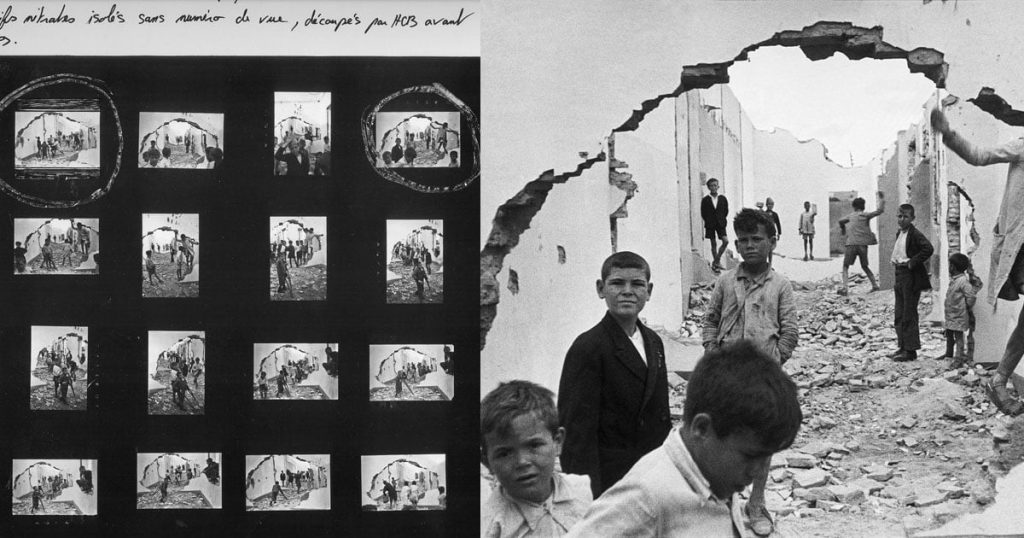
The famous image didn’t appear fully formed.
It emerged from a sequence – small shifts in timing, position, and framing – until the moment resolved.
What This Teaches Beginners
The Rule of Three develops:
- patience
- observation skills
- composition awareness
- better metering decisions
- better focus technique
- a rhythm
- a sense of working the moment
It shifts your mindset from snapper to photographer.
Pro Tip: Review Your Sequences Side-by-Side
When you get your scans back:
- Find all your sequences of three
- Compare them
- Look for patterns in what improves between frames
You’ll quickly see:
- frame 1 = rushed
- frame 2 = more thoughtful
- frame 3 = calmer, more accurate, better composed
That pattern is the heart of learning film.
Conclusion
The Rule of Three is not about shooting more —
it’s about shooting better.
Three frames:
- deepen your awareness
- increase your keeper rate
- reduce disappointment
- reveal how light and perspective shape an image
- build confidence with every roll
Great film photographers don’t trust single moments to a single frame.
They work the scene – deliberately, thoughtfully, and calmly.
Three is all you need.