
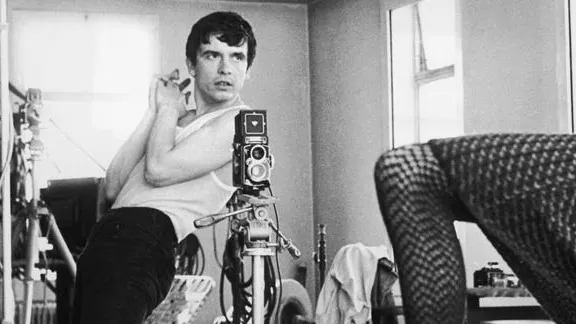
David Bailey didn’t just change photography, he changed what photographers looked like.
Gone were the stiff suits and polite distances of the 50s lensmen. Bailey swaggered in with a leather jacket, a camera and a working-class accent and made being a photographer look cool. He shot The Beatles, the Stones and Warhol with the same raw energy he brought to Soho models and East End gangsters.
And while he may be better known for his Rolleiflex, his partnership with Olympus during the 1970s and ’80s brought a swagger to the brand that no amount of spec sheets ever could.
Bailey didn’t just use Olympus, he became its voice, its image, its attitude.
The Photographer Becomes the Star
Born in 1938 in Leytonstone, East London, Bailey was dyslexic, working-class and instinctively visual. He got his first camera in the RAF and never looked back. By 1960 he was shooting for Vogue and within a few years had become the most recognisable fashion photographer in Britain.
Alongside Donovan and Duffy, he formed the Black Trinity, but where Donovan was technical and Duffy controlled, Bailey was pure instinct.
He didn’t pose people. He caught them off guard, alive, honest and just a little uncomfortable.
And people noticed. By the early 70s, David Bailey was famous, not just in photo circles, but across pop culture.
Fashion First, Fame Second
In the 1960s, Bailey wasn’t just a fashion photographer, he was fashion. At a time when most image-makers were anonymous, Bailey became more famous than the people he photographed. He didn’t just appear in Vogue, he defined its look.
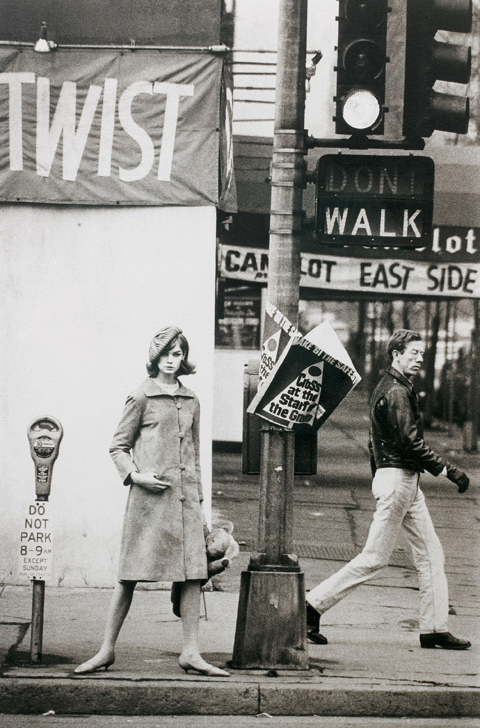
He tore through the prim choreography of the previous era and replaced it with something urgent, urban, and alive. Models didn’t pose: they danced, laughed, moved. Shrimpton. Penelope Tree. Jane Birkin. His women weren’t mannequins. They had power.
Bailey’s shoots felt like collaborations, not instructions. He often worked quickly, instinctively, refusing to over-style or overthink. Clothes became part of the story, but never the whole story. What mattered was energy.
He took fashion off the pedestal and put it in the real world. Grit, spontaneity, sex. Bailey gave British fashion photography its first real pulse.
His impact was so strong, it even shaped cinema, Michelangelo Antonioni’s 1966 cult classic Blow-Up was loosely based on Bailey’s swaggering, chaotic studio life in swinging London. Fictional, yes but unmistakably Bailey.
Icons in Frame
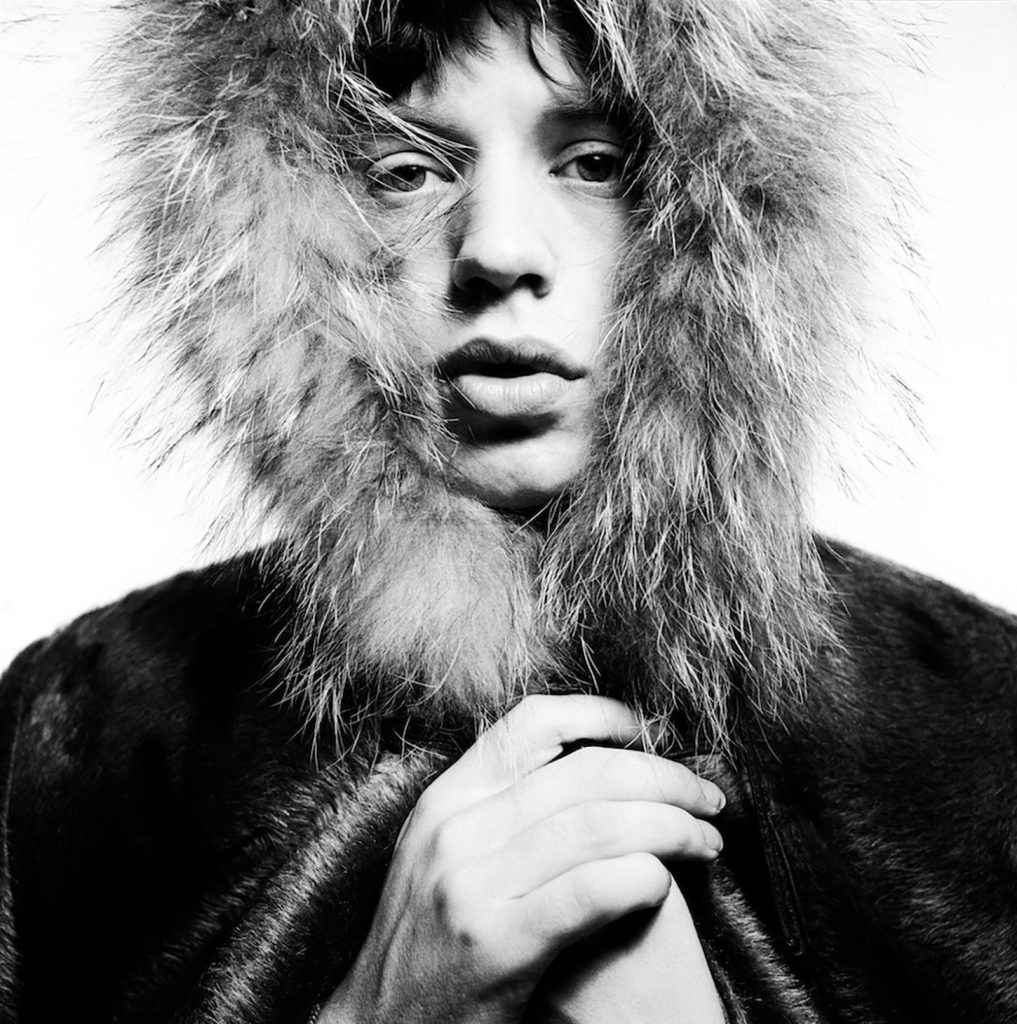
Bailey’s portraits didn’t just capture the stars, they helped create them.
His stark black-and-white image of Mick Jagger in a fur hood turned the Stones frontman into a shamanic icon.
His photos of Andy Warhol, John Lennon and Paul McCartney, Michael Caine, Catherine Deneuve and Marianne Faithfull are still printed, referenced and revered today.
He photographed everyone from the Kray twins to the Queen. And in every frame, there’s that Bailey edge: direct, raw, alive.
Bailey didn’t dress people up – he stripped them back. A white background, a stare and nothing to hide behind.
He didn’t shoot around people, he shot into them.
The Olympus Partnership: Trip, OM and Attitude
In 1972, Olympus introduced the Trip 35, a fixed-lens 35mm compact camera. It was small, sharp and easy to use, aimed squarely at the growing amateur market. But what gave it punch? David Bailey in the ads.
His tagline? Just one click and I’m in love.
The delivery? Deadpan. Cockney. Instant icon.
The Olympus Trip became a runaway success, selling over 10 million units. The campaign didn’t show tech specs. It showed Bailey, relaxed, charismatic and accessible. If Olympus made cameras for everyone, then Bailey made it cool to pick one up.
He continued endorsing Olympus through the 1980s, including ads for the OM-10 and OM-2. Whether he used them daily is secondary, what mattered is that when Olympus wanted to speak to the every man, they chose Bailey’s voice.
And people listened.
OM Style in the Bailey Aesthetic
Bailey’s best-known cameras were his Rolleiflex and later Canon F-1, but Olympus gave him a different kind of platform. The OM ethos: compact, fast and no-nonsense, echoed Bailey’s entire approach. His portraits were never overlit or overworked. They were fast, close, alive. The kind of work you could absolutely shoot on an OM.
He praised the OM-1’s design and simplicity in interviews and used it on location when discretion mattered. He even featured Olympus cameras in some of his TV projects and documentaries.
As Bailey once hinted, he shot quickly because thinking gets in the way.
If Olympus built cameras to get out of the way, Bailey’s attitude made them desirable.
Legacy: Selling the Craft Without Selling Out
David Bailey helped Olympus do something no spec sheet could: make 35mm cameras sexy. He showed the public that photography didn’t have to be technical or elitist. It could be instinctual, expressive, fun.
His role wasn’t just behind the lens… it was on the page, in the ads, and in the culture.
If Maitani built the machines, Bailey made people want them.
Maitani gave Olympus its soul. Bailey gave it its swagger.
Watch: David Bailey, Who’s He?
Below is a compilation of Bailey’s iconic Olympus TV ads, where deadpan humour met marketing genius.
No models, no specs. Just one click, one cocky grin, and a nation asking:
David Bailey? Who’s he?