
Film is a living, ageing thing. Even when it’s sitting quietly in a box, it’s still changing. Heat, time, and humidity all have a say in how your negatives will look in the future. Store film well and it stays predictable, clean, and flexible. Store it badly and you invite fog, colour shifts, loss of contrast, and that vague sense of why does this look a bit off?
This isn’t about being precious or obsessive. It’s about control. Good storage buys you time and consistency, whether you shoot fresh stock every week or hoard film like it might be discontinued tomorrow.
What Actually Damages Film
Before talking about fridges and freezers, it helps to understand what you’re protecting film from.
Heat
Heat accelerates chemical reactions inside the emulsion. The warmer it is, the faster film ages. This shows up as base fog, muted colours, and lower contrast.
Humidity
Moisture is the quiet killer. High humidity can damage packaging, encourage mould, and in extreme cases affect the emulsion itself.
Radiation and background exposure
Cosmic radiation and background radiation slowly fog film over time. You can’t eliminate it completely, but colder temperatures slow its effects.
Time
Even in perfect conditions, film ages. Cold storage doesn’t stop time, it just stretches it out.
Storing Film at Room Temperature
Room temperature storage is fine if:
- The film will be used soon
- The room is cool, dry, and stable
- You are rotating stock regularly
A cupboard away from sunlight and heat sources is perfectly acceptable for short-term storage. Many photographers shoot film this way with no issues at all.
The problems start when:
- Rooms fluctuate in temperature
- Film sits unused for months or years
- Summer heat creeps in
That’s where cold storage earns its keep.
Why Fridge Storage Works
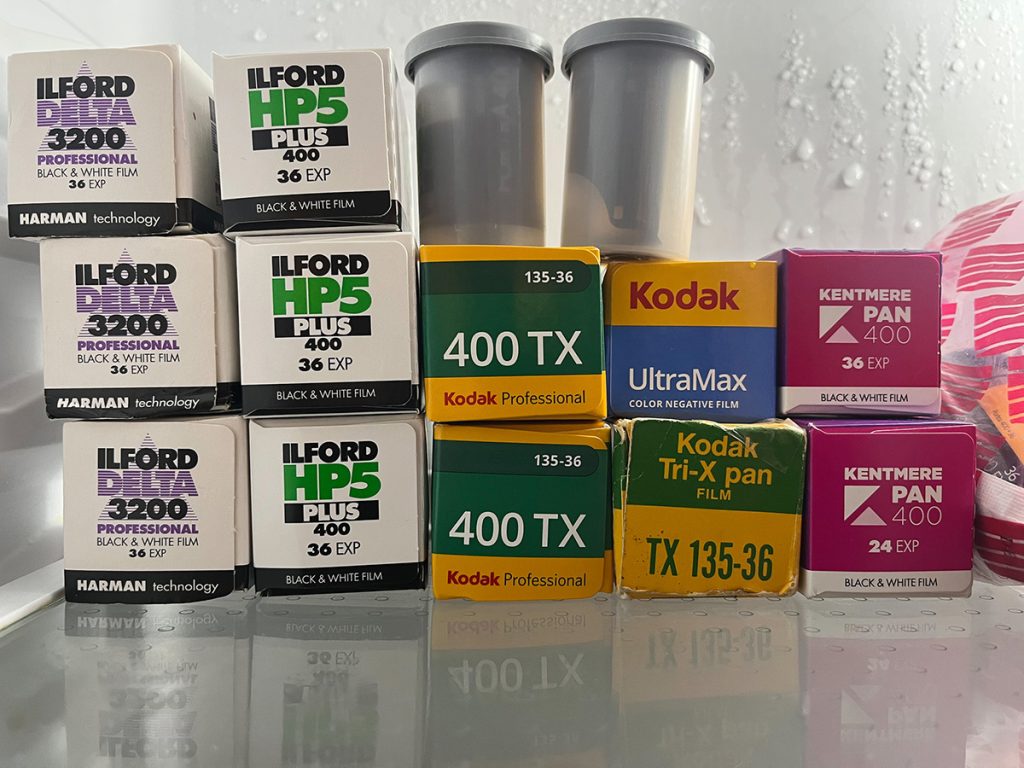
A refrigerator slows chemical ageing dramatically while remaining practical for film you plan to shoot regularly.
Benefits of fridge storage
- Slows fog build-up
- Preserves colour accuracy
- Extends usable life beyond the expiry date
- Reduces contrast loss over time
For most photographers, the fridge is the sweet spot.
Best practice
- Keep film in its original plastic canister or foil wrapper
- Place rolls inside a sealed zip-lock bag
- Add a small silica gel packet to control moisture
- Label the bag clearly so nobody mistakes Portra for parmesan
Stored like this, film can comfortably last years beyond expiry with minimal degradation.
When the Freezer Makes Sense
Freezer storage is for long-term holding. Think of it as putting film into hibernation.
When to freeze film
- Bulk purchases
- Rare or discontinued stocks
- Slide film you want to preserve perfectly
- Film you won’t shoot for a year or more
At freezer temperatures, chemical reactions slow to a crawl. Colour shifts and fog progression are dramatically reduced.
- How to freeze film safely
- Double-bag film in airtight zip-lock bags
- Remove as much air as possible
- Include silica gel
- Clearly label contents and dates
Modern film handles freezing extremely well. The emulsion isn’t harmed by cold; moisture is the only real enemy.
Warming Film Before Use (This Matters)
The biggest mistake people make is loading cold film straight into a camera.
When you take film out of the fridge or freezer:
- Leave it sealed
- Allow it to return to room temperature naturally
- Fridge film: around 1-2 hours
- Freezer film: 6-8 hours or overnight
Opening cold film too early invites condensation, and condensation is where problems start. Patience here saves ruined rolls.
What About Expired Film?
Cold storage is why some expired film looks surprisingly good and some looks completely unhinged.
If expired film has been:
- Refrigerated or frozen since new: often very usable
- Stored in a hot loft or garage: expect heavy fog and colour shifts
Black and white film tolerates age better than colour. Colour negative handles age better than slide film. But all film benefits from cold storage.
If you’re buying expired film, always ask how it was stored. That single question matters more than the expiry date itself.
Airport X-Rays and Cold Storage
Cold storage does not protect film from airport scanners.
If you care about a roll:
- Carry it in hand luggage
- Request hand inspection where possible
- Especially important for ISO 800 and above, and for pushed film
Once fog is added by scanners, no amount of freezing will undo it.
A Simple Storage System That Works
You don’t need a lab-grade setup. This is enough for most photographers:
- Short-term shooting stock: fridge
- Long-term or bulk stock: freezer
- Everything sealed, labelled, and dry
It’s boring. It’s sensible. And it keeps your film behaving the way you expect it to.
Final Thought
Storing film properly isn’t about chasing perfection. It’s about removing variables you don’t need. When you load a roll, you want to be thinking about light, timing, and composition, not whether the film has quietly sabotaged you before you even pressed the shutter.
Cold storage gives you that peace of mind.
And in film photography, that’s worth more than a few inches of fridge space.
For readers still deciding which films are worth keeping and shooting:
Beginner Film Stocks Guide – What to Shoot and Why