From the outside, Peter Anderson’s studio looks modest. A garage door on a quiet street in Maze Hill gives little away. Peter meets me there and opens it. The space begins to reveal itself.
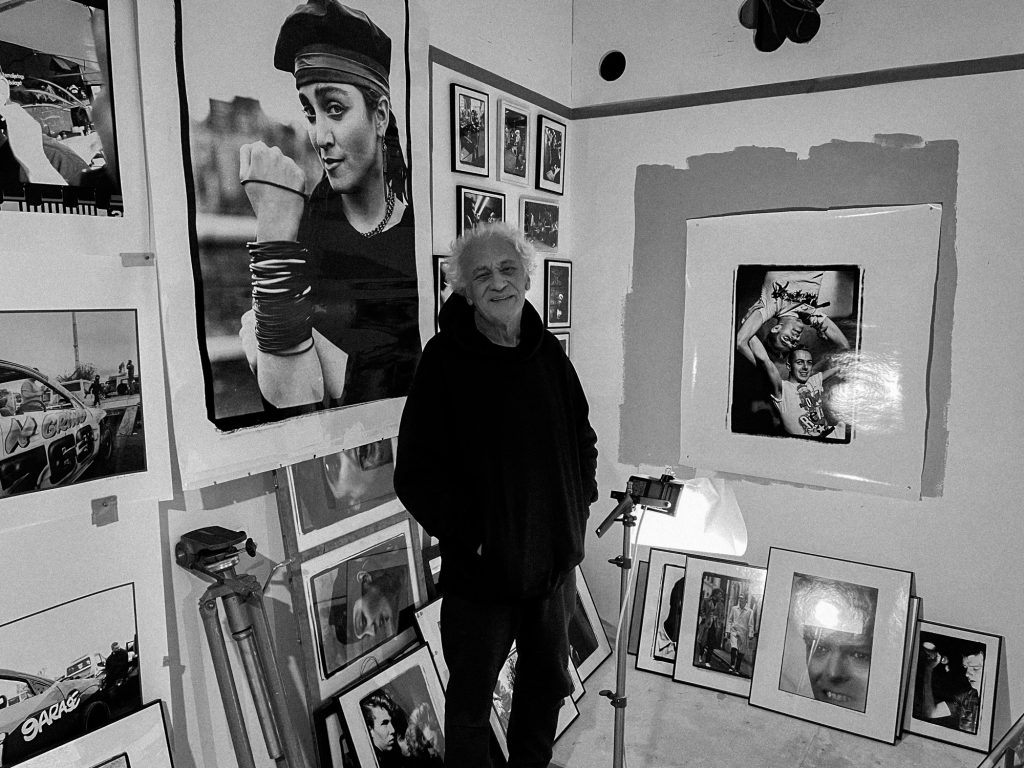
Inside, a narrow corridor lined with large prints draws you forward. Faces line the walls, large prints, forming a quiet procession of decades past. You walk its length, pull back a curtain, and the space opens suddenly into something far larger than the exterior suggests.
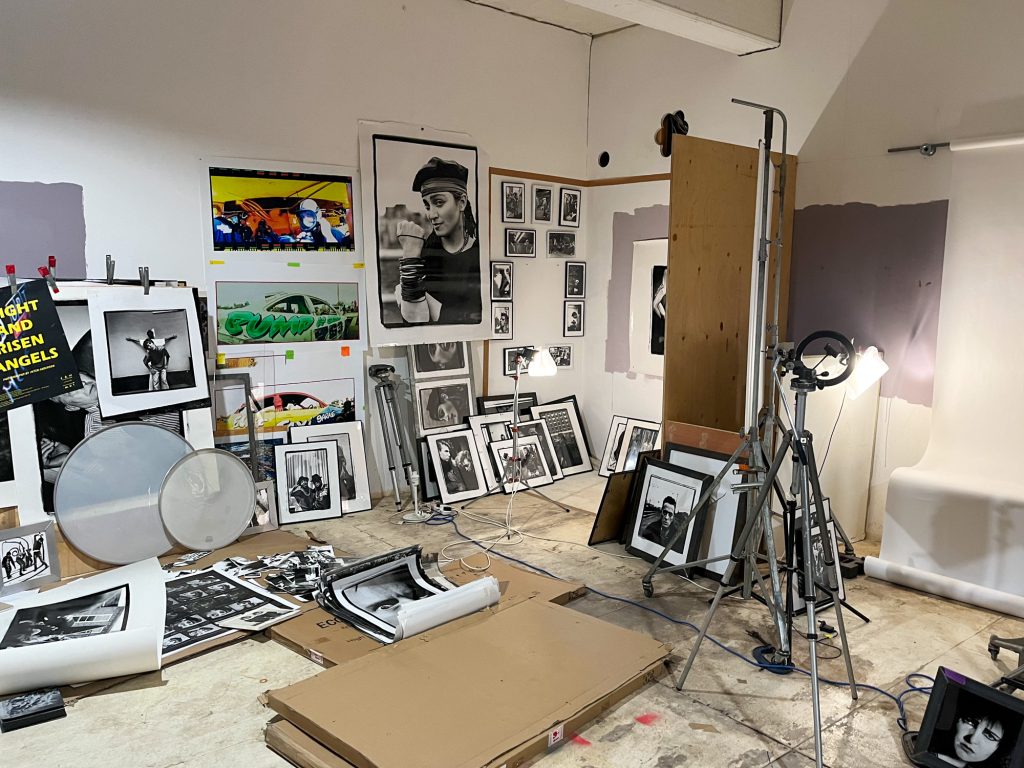
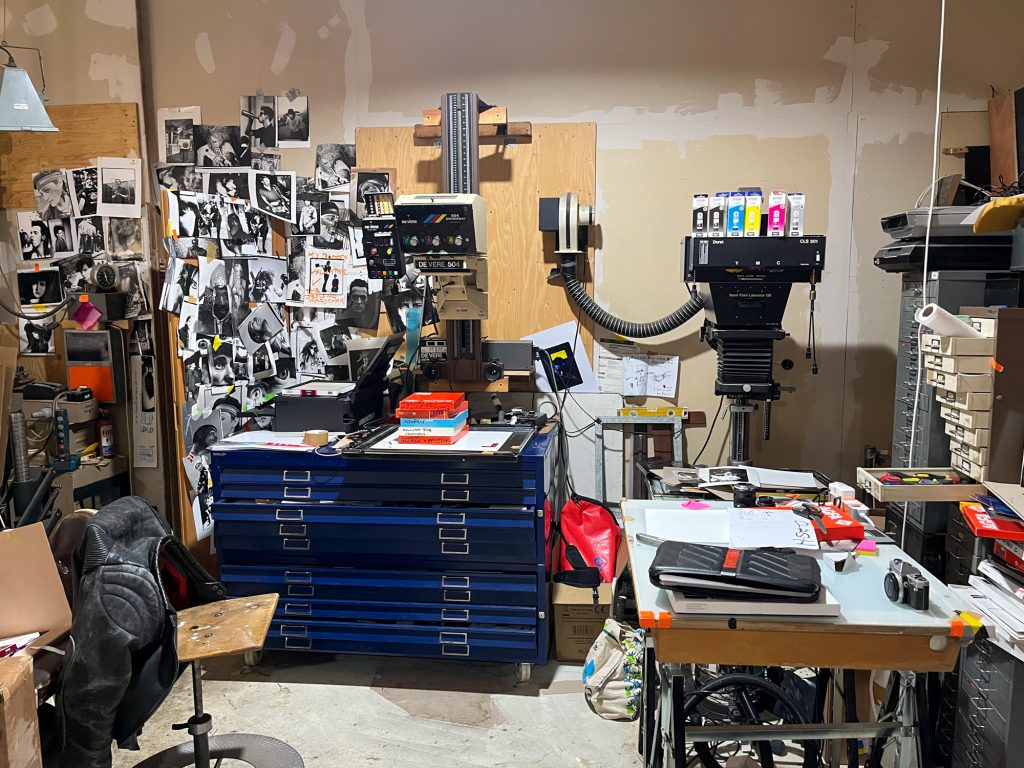
A studio unfolds. Additional rooms branch off. The front of the space feels organised and deliberate. Deeper in, the darkroom carries the layered energy of ongoing work – prints, tools and materials arranged in a way that feels active rather than chaotic. The wet area is separate from the enlarger space, practical and clean.
Peter greets me with a calm, measured voice. Within minutes he is moving quickly from photograph to photograph, animated as he talks – one frame, then another, another familiar subject from another era. The energy sits in the images. He remains steady.
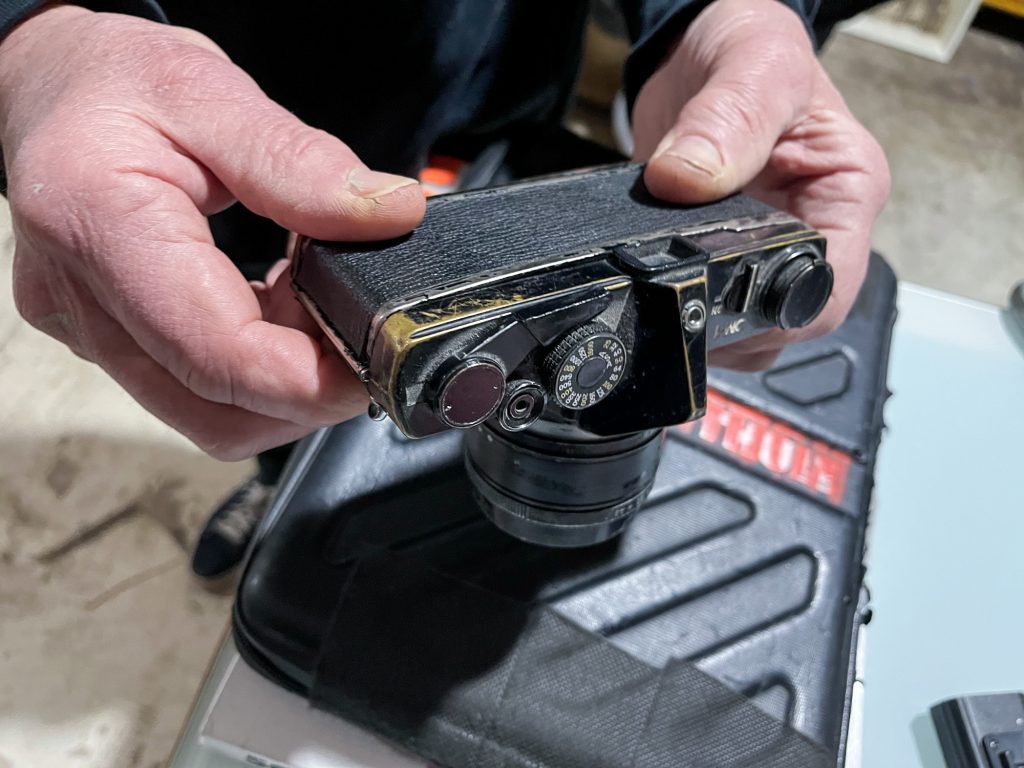
On a table near the centre of the room sits a case. Inside are the cameras – OM-1, OM-2, OM-3, OM-4 – lined up without ceremony. The brassing is heavy. Edges worn through to metal. Paint rubbed thin from decades of use. These are not collector pieces. They are working cameras.
From Art College to the Music Press
Anderson did not set out to become a chronicler of the music world. He studied screen printing and photography at art colleges in Glasgow and later London. The camera was already part of his education. As a student carrying an early Olympus OM, he was often asked to photograph events and people. It was practical rather than strategic – a skill he had and used.
Originally, he wanted to move into fashion photography. But while studying in London he began photographing bands and approached magazines directly with his work. Some images were published. Soon after, assignments began arriving at short notice.
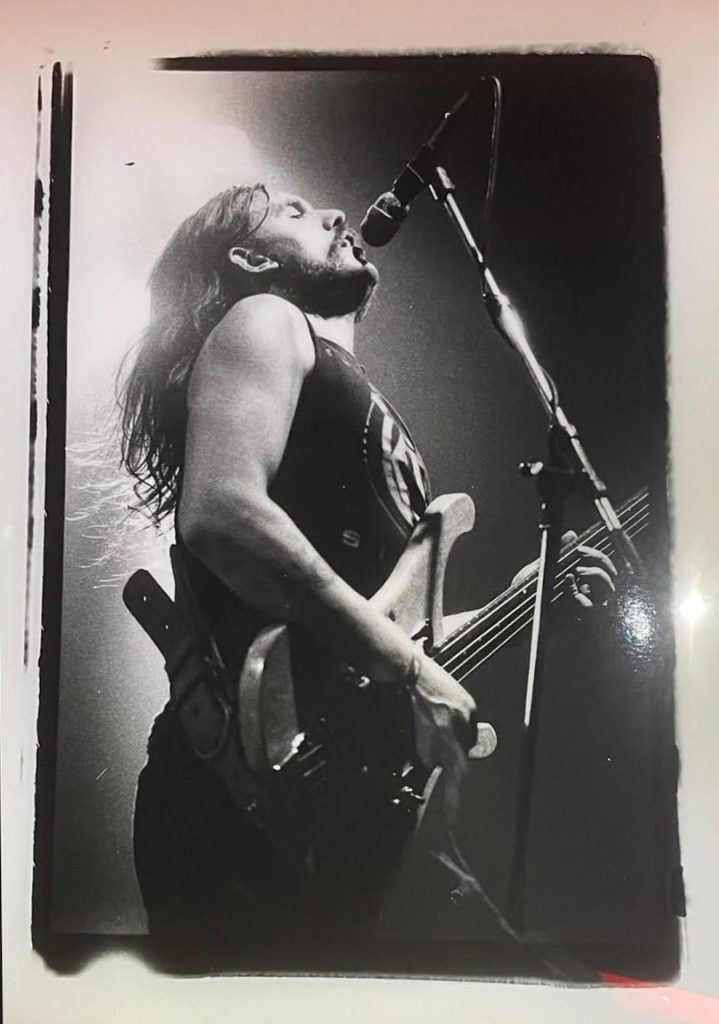
Over the following years he travelled widely, photographing major figures in the music industry for publications including NME. Access was rarely immediate. He would sometimes wait hours, occasionally days, for a small window of time. When it came, he worked quickly and decisively.
Why Olympus
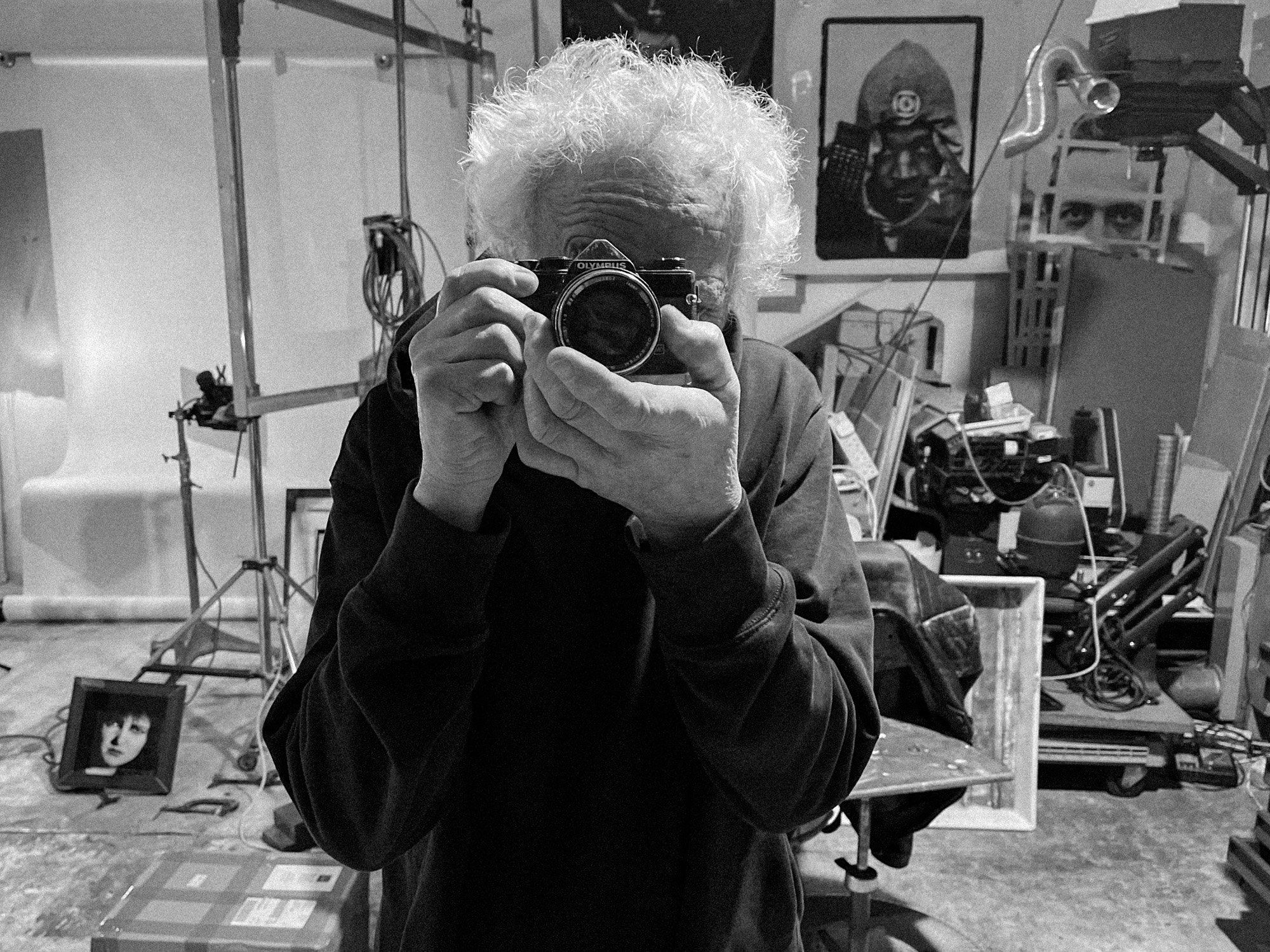
Anderson used Olympus OM cameras because they were light, practical and discreet. He could carry a body in one pocket of a denim jacket and a lens in the other. No bulk. No theatre. That mattered when working around musicians, backstage and on the move.
His main camera – and the one responsible for much of his work – was the OM-1 paired with the 55mm f/1.2. His favourite lens. He speaks about it with clarity rather than nostalgia.
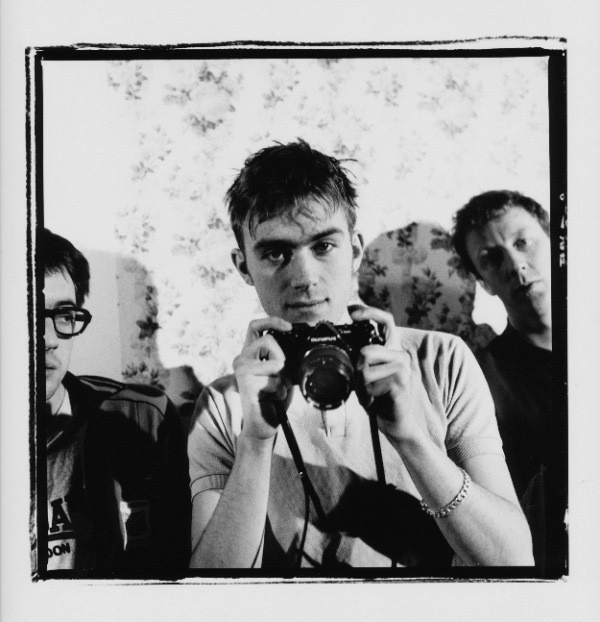
When I ask whether I can try it, he mentions it has not been used in years and he is unsure how well the focus will hold. I mount it to my own OM-1 and make a single frame of him, then return it. Even unused for a period, it feels purposeful in the hand.
Over the years his kit included the OM-1, OM-2, OM-3 and OM-4. The OM-4 never fully earned his trust. Electronics failed. Batteries drained unexpectedly. In professional environments, reliability matters more than innovation, and he returned consistently to the OM-1 and OM-2.
He also pulls out an Olympus XA – a compact he used on shoots, including sessions with Madonna. Small did not mean secondary. It meant freedom.
He experimented with medium format systems, including Hasselblad, but always came back to Olympus.
Simplicity, reliability and speed won.
The Madonna Session
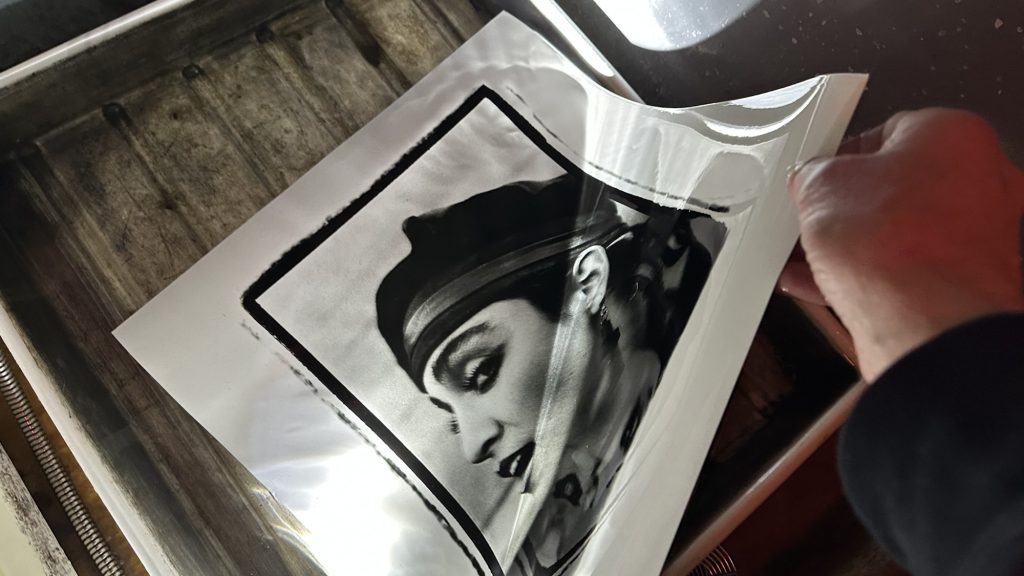
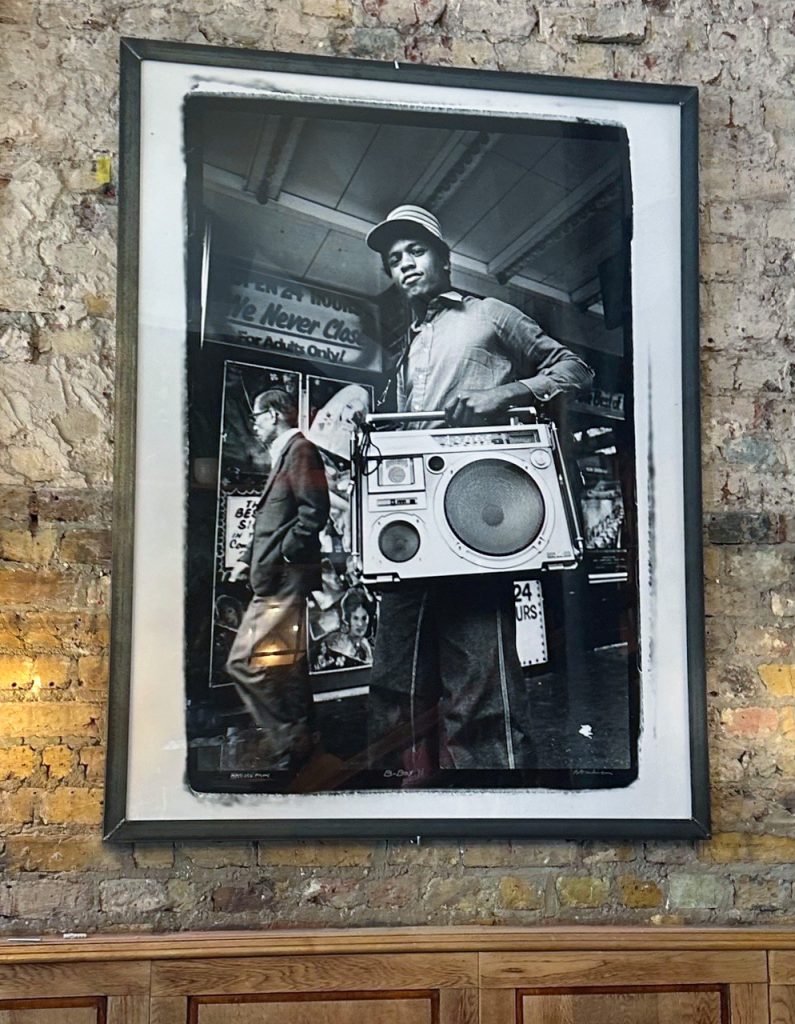
In 1983 he photographed Madonna on the rooftop of her record label. The session now forms the basis of his recent book, Provoke – devoted entirely to that shoot, bookended by photographs of New York’s street music scene in the 1980s. Boom boxes on shoulders. Music spilling into public space.
He exposed around fifty frames.
All different. No repetition. No machine-gun shooting.
The session was made on the OM-1 – the first camera he bought and never truly left.
He describes Madonna as easy to work with. He prefers to let people be themselves rather than over-direct. Observe rather than manufacture.
Working Method
Peter preferred to be close. He didn’t like standing back with long zoom lenses. If he could move in, he would. His lenses reflect that approach: 28mm and 35mm for space and context, the 55mm f/1.2 as his mainstay, with an 85mm or 100mm when compression was needed. A 24-48mm zoom appeared in his kit at one point, but he preferred primes.
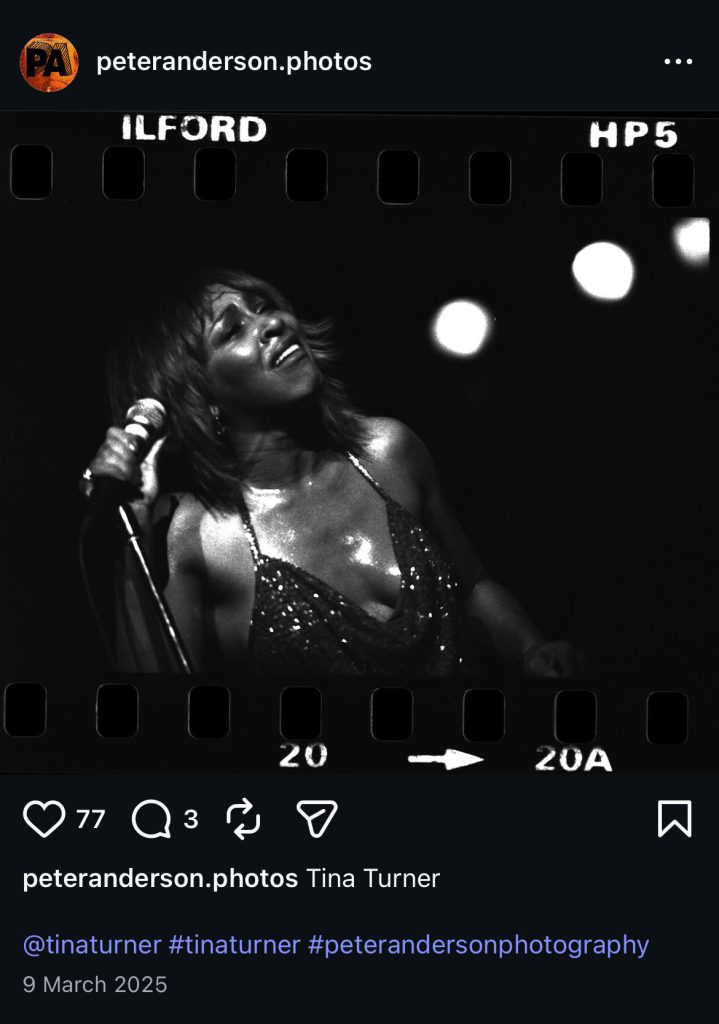
Available light was the starting point. At gigs, where light was often poor, he pushed HP5 and T-Max. That meant extended development times – sometimes close to thirty minutes depending on how far the film had been pushed.
If artificial light was required, he preferred harder sources rather than soft glamour setups. Flash was used rarely.
In the early years, he developed film wherever circumstances allowed – hotel bathrooms on tour, his own bathtub when starting out. The process adapted to the job.
When he first began working professionally, contact sheets were not always practical. Instead, he would hold the negative to the light and choose the strongest frame directly.
Decisions were made quickly and with confidence.
Influences
When talking about photographers who shaped him, the references are clear.
Richard Avedon.
Irving Penn.
Bill Brandt – whom he met while studying at college.
William Klein.
Diane Arbus.
The connection is not imitation. It is directness. Presence. A willingness to stand in front of the subject rather than hide behind production.
Brandt in particular left an impression. Not stylistically, but in attitude – serious about the work, uncompromising about the frame.
There is a thread there. Black and white. Closeness. Psychological weight. A refusal to over-glamourise.
It makes sense.
The Prints
Standing in front of the prints lining the studio walls, the scale is immediate. Some stretch to around five by four feet. They hold.
There has long been debate about whether 35mm film carries enough resolution to print large. In this room, that question feels irrelevant. The negatives hold the detail. What matters is the photograph.
The first large prints were made using a 35mm Focomat enlarger, set up on a scaffold tower and exposed onto the floor. Development was done by hand – buckets and sponges, with makeshift trays built from shuttering plywood. Exposure times could stretch to forty minutes.
Peter prefers black and white. Much of his colour work has been lost over time, while the black and white archive remained intact. The tonal depth and grit suit the way he sees.
He is not afraid to crop if it strengthens the image. The frame serves the photograph.
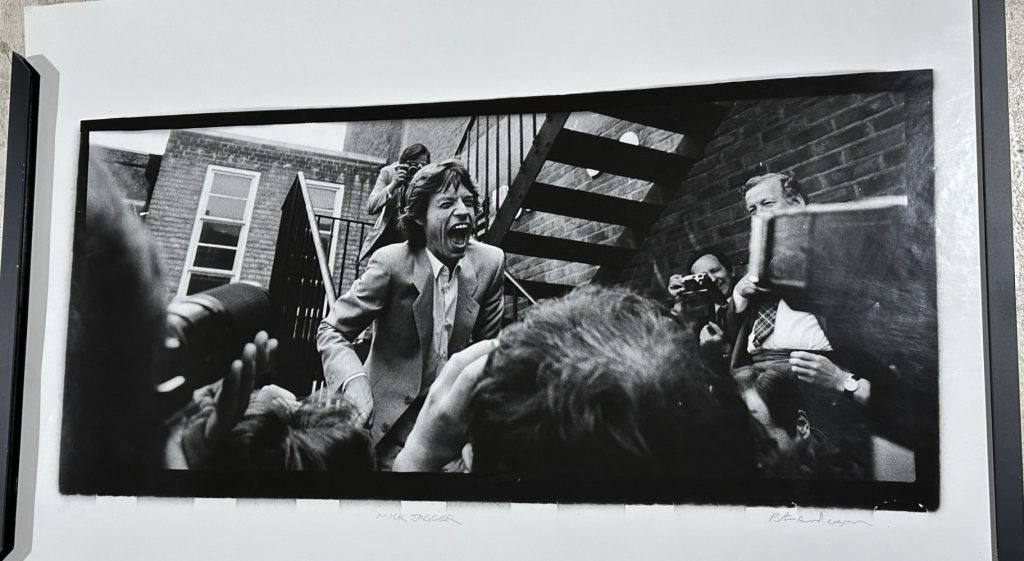
He shows me an image of Mick Jagger framed among other photographers photographing him – observation layered inside performance.
The Hiatus and Return
There was a period where photography stopped.
The archive sat quietly. Negatives boxed. Prints stored.
During Covid he returned to it and began working back through decades of material with the help of an assistant – selecting frames, preparing exhibitions, building books.
Now the focus is on refining what already exists and printing it at scale. Time works in photography, but there isn’t enough of it.
The Industry Now
When asked whether photography is harder today, he doesn’t romanticise the past. Creatively, it is the same. Making a strong photograph has never been easy. Commercially, it is harder. There are simply more images now. More noise.
The advice is straightforward.
Think differently.
Make your own projects. Understand the business side.
He doesn’t offer a formula. Just the reality.
One Frame
Before leaving, I ask Peter if he wouldn’t mind me taking his portrait. While photographing him, I ask how he would describe his life in three words.
Gone too fast.
The answer comes without hesitation.
Earlier, I had mounted his 55mm onto my camera and made a frame of him. Now I hand him my OM-1. He shifts slightly, raises it, and makes one exposure. No burst. No hesitation. Just one frame.
Experience does not look dramatic. It looks restrained. The cameras remain on the table – brassed, worn, used.
Small cameras. Small negatives. Large prints.
To learn more about Peter Anderson’s work, including current exhibitions and publications, visit his website and follow his updates on Instagram. His archive continues to expand, and new prints and projects are regularly being prepared for exhibition.