

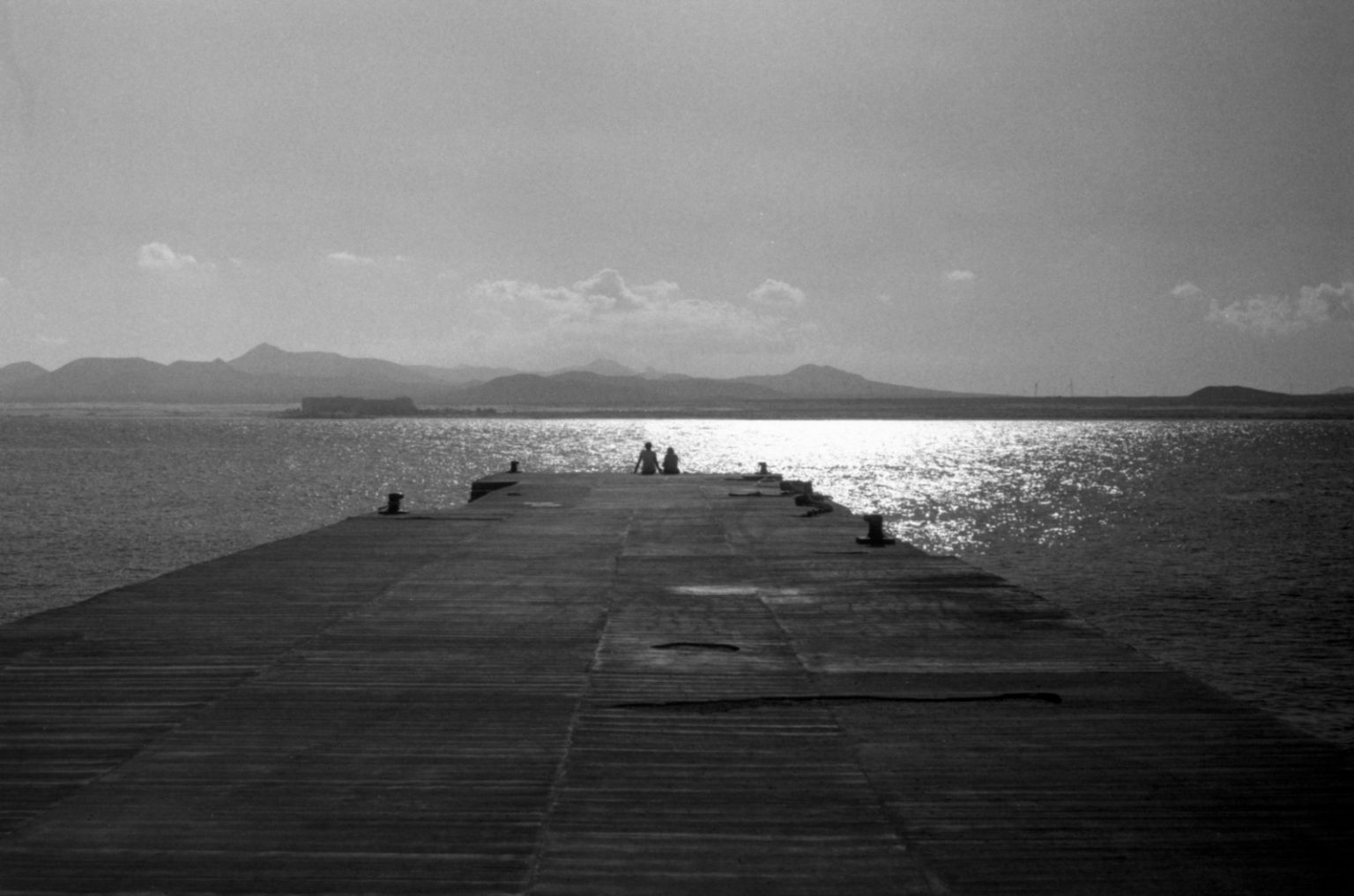
I didn’t go to Fuerteventura for photography.
I went for the surfing.
That’s worth saying upfront, because surf trips don’t leave much room for photographic intention. Most days are shaped by tide, wind, swell, and the quiet negotiation between enthusiasm and what your shoulders will tolerate. You’re either in the water waiting for something to happen, or standing afterwards, damp and salt-stiff, rehydrating and waiting for your arms to feel like part of your body again.
Photography, if it happens at all, happens around that.
This was my first visit to Fuerteventura – widely considered the surf capital of Europe, a title it wears with a great deal of wind and very little fuss. It’s also an island that seems to encourage walking, particularly on days when the sea or your body makes it clear that another session would be a poor decision.
From a distance, the island looks empty. When you’re actually there, you realise that this is intentional. Pale sand, low volcanic hills that appear to have stopped halfway through, and roads that drift off into brightness without much interest in where they’re going. Things exist on their own terms. You’re just passing through.
I liked that.
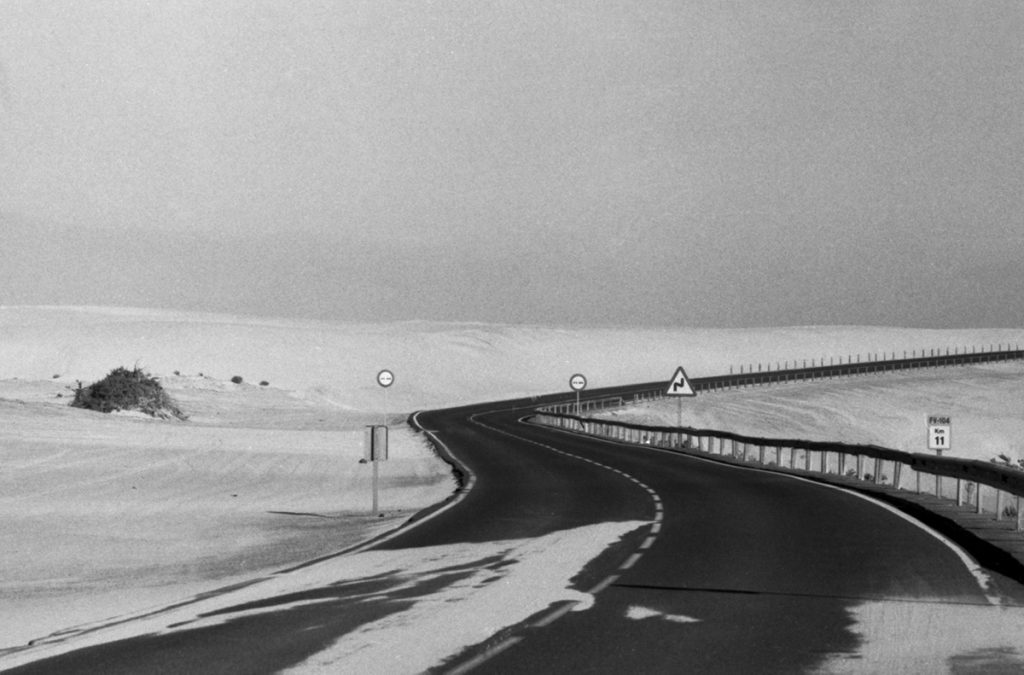
When I wasn’t surfing, I walked. Not with a plan. Just far enough to see what was there, and then a bit further.
On two days off from the water I joined a group tour around the island, which is always a slightly odd experience when you’re travelling on your own. Group tours are, by design, awkward. You are briefly assigned a small collection of strangers and expected to bond at speed, usually while standing around in the sun pretending not to look at one another.
As a solo traveller, you are immediately identified. The tour guide clocks you within minutes and makes a point of checking in, asking questions, and occasionally singling you out for friendly attention to ensure you feel “included”. This is well-meaning, but also guarantees that you will be spoken to more than you had planned.
It was fine. Mostly.
The tour itself was slow and meandering, which suited the island. We stopped, looked, moved on, stopped again. I took photographs when something caught my eye and ignored most of what didn’t.
One man on the tour was carrying a large DSLR with a super-zoom lens that appeared to extend indefinitely. He swung it from side to side with great seriousness, occasionally stepping backwards to make room for it. I found myself thinking that he should probably have bought a second ticket for the camera alone, if only out of courtesy.
By contrast, my Olympus OM-1 and three small lenses barely registered. A 28mm 2.8, a 50mm 3.5, and a 135mm 3.5. Light, compact, and easy to forget about – which turned out to be exactly what the trip needed. Nothing dug into my shoulder. Nothing announced itself. I could walk, stop, shoot, and move on without rearranging my life.
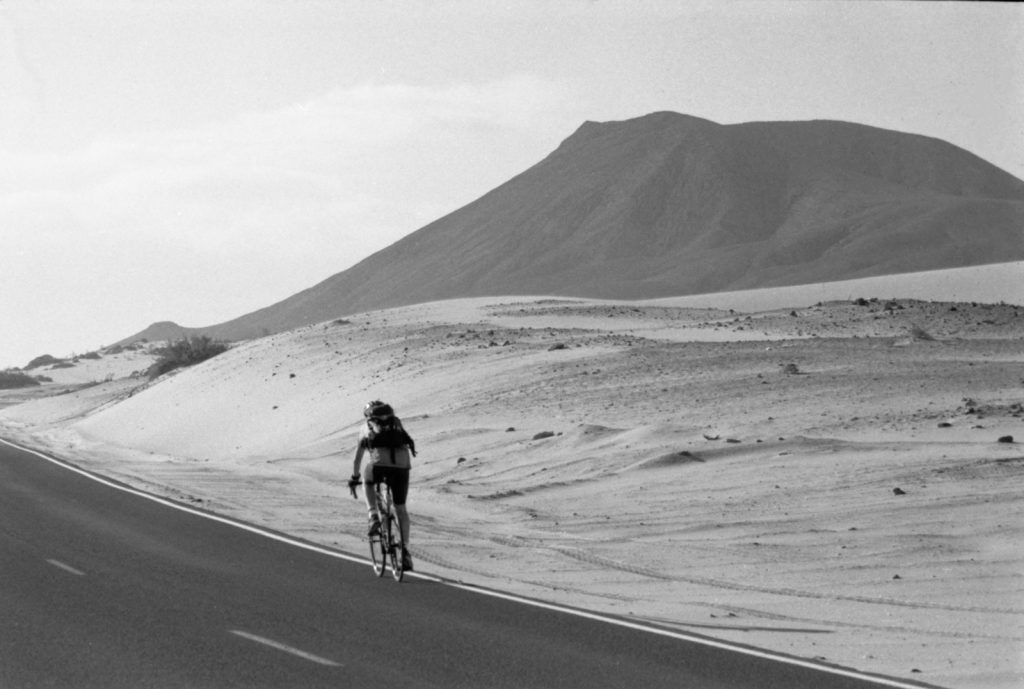
The 28mm came out when the island insisted on being bigger than me – dunes, roads, wide spaces that didn’t want trimming. The 50mm handled most things without comment. The 135mm was there for moments when standing back felt more honest than stepping closer.
They did their jobs quietly and stayed out of the way.
That suited me.
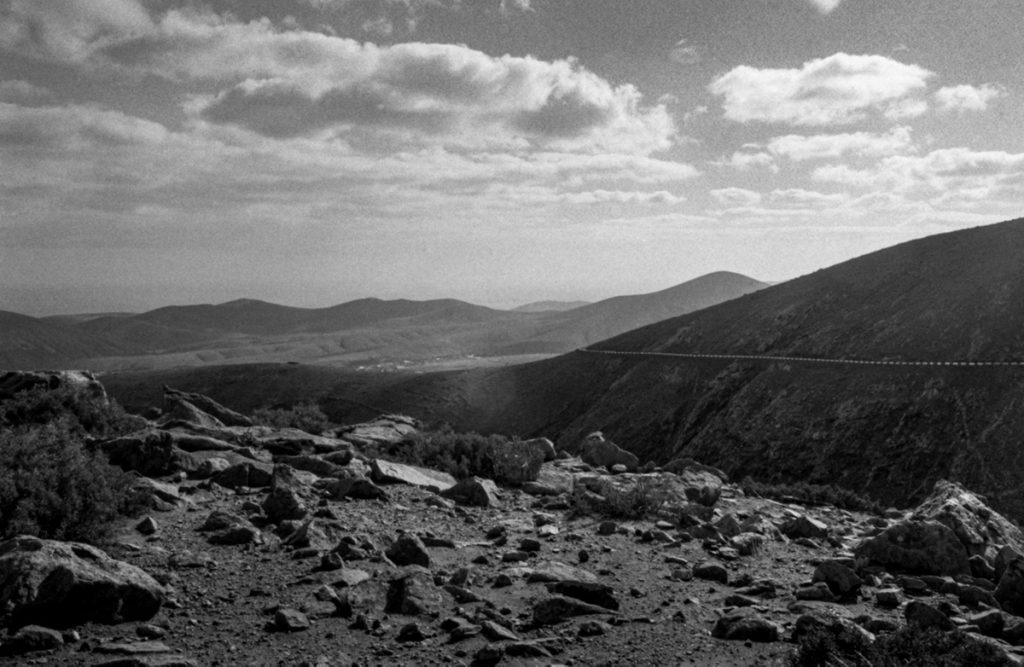
There are no surf photographs here. When you’re surfing, you’re busy surfing. The camera stays out of it.
One of the days off included a short boat trip to Lobos Island, which felt different immediately. Smaller. Quieter. Removed. I walked away from the main path, found my own patch of sand and sea, and stayed there for a while. I swam, lay in the sun, walked the island slowly, and didn’t feel the need to record much of it at all.
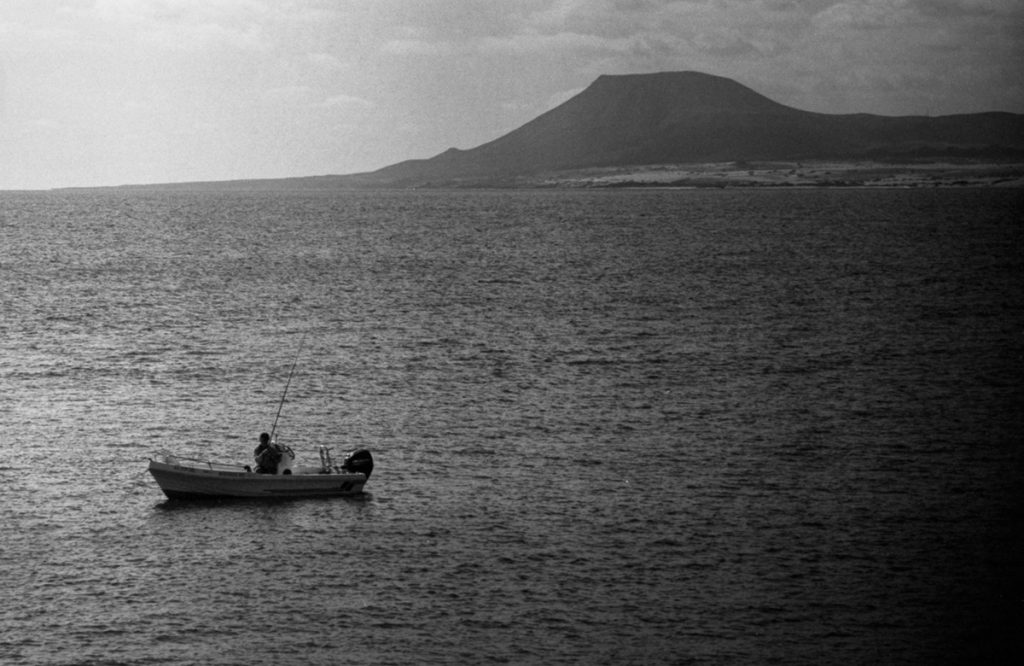
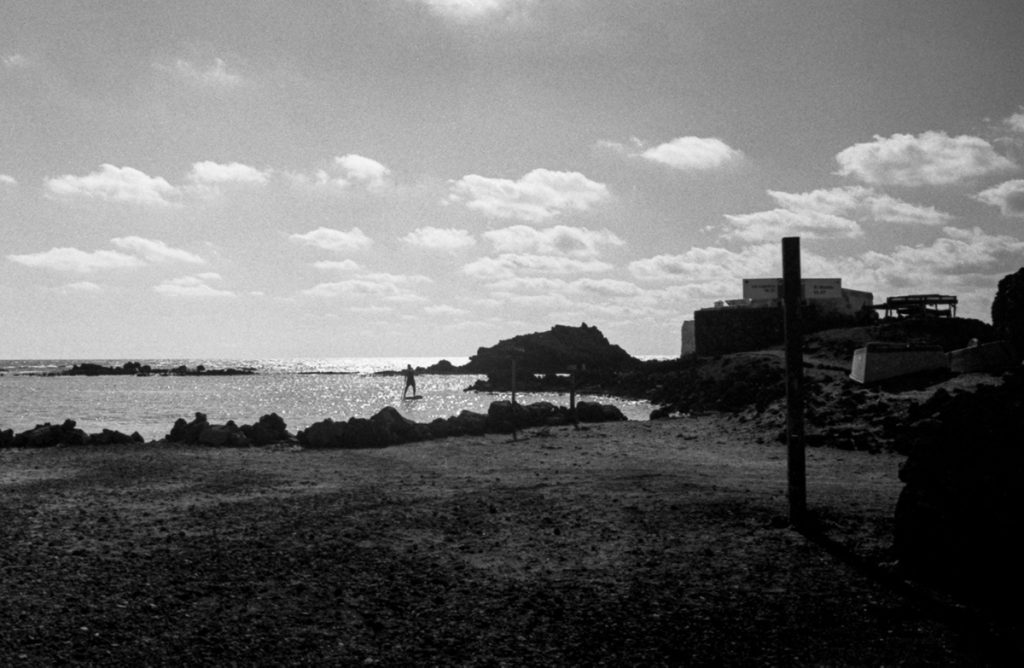
It felt like proper escapism – the kind that doesn’t ask for documentation.
Film fits places like this. Once the shutter goes, the moment is finished. There’s nothing to check, nothing to adjust, nothing to immediately judge. You either noticed something, or you didn’t, and you only find out later. That removes a particular kind of pressure – the pressure to keep proving that you’re paying attention.
In Fuerteventura, that makes sense. Light turns the sea to silver without asking permission. People appear briefly against wide horizons and then disappear again. Boats sit where they sit. Roads lead confidently into very little. Nothing waits for you to decide whether it’s worth photographing.
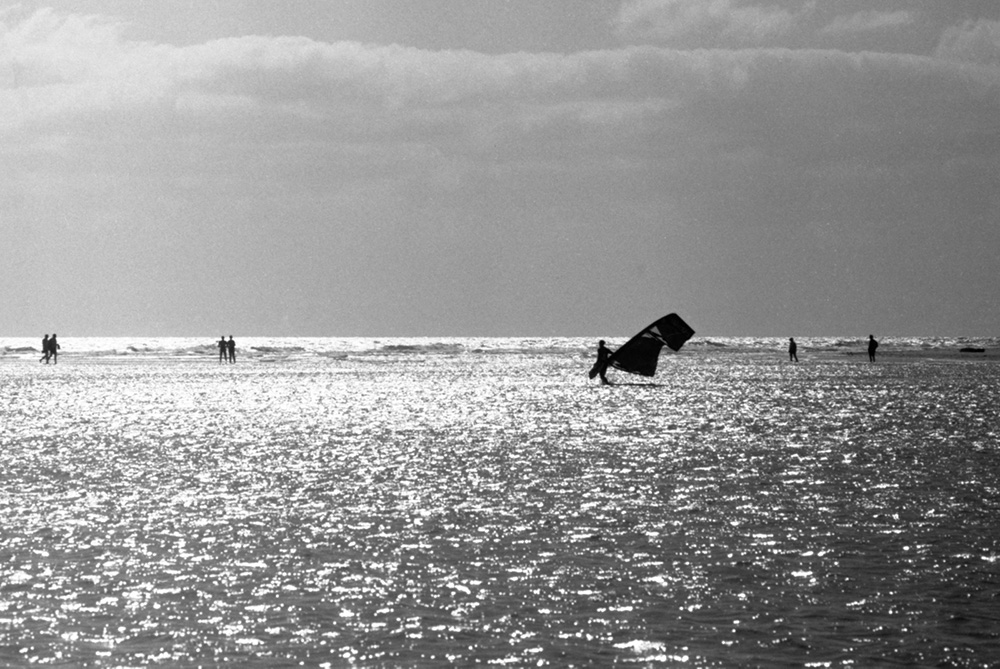
The OM-1 never complicated any of this. It didn’t suggest alternatives or offer reassurance. It simply let me look, decide, and move on.
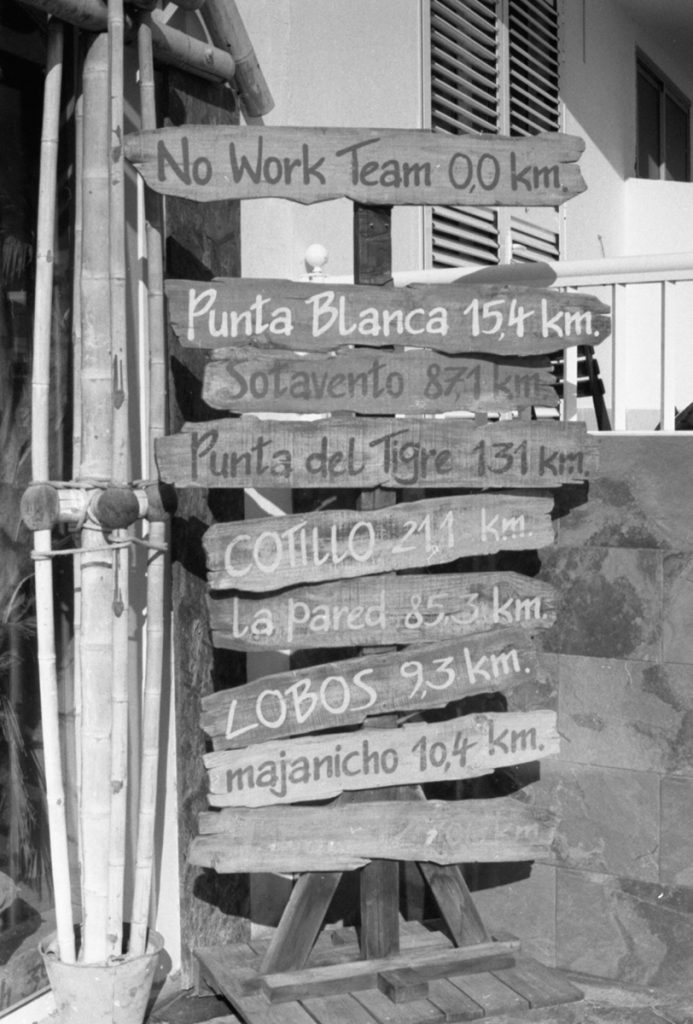
What held my attention wasn’t activity, but scale – and the slightly hopeful way people try to exist within it. A cyclist crossing a wide road. A lone figure on a ridge. Signs pointing confidently to places that don’t seem to be in a hurry. Buildings that look as though they wouldn’t object if the island quietly took them back.
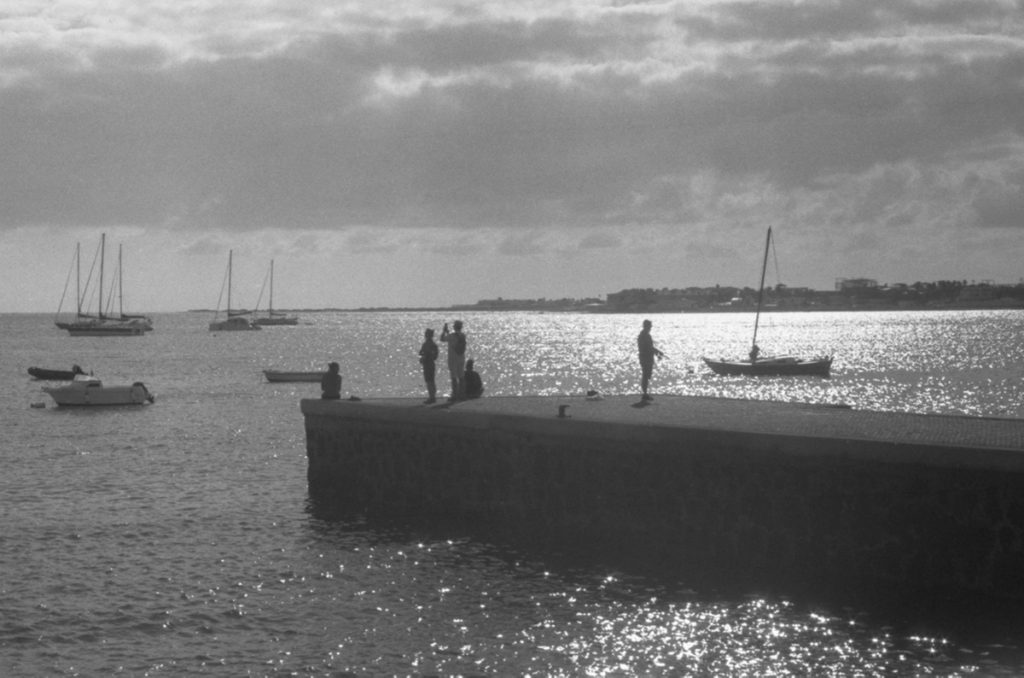
Tri-X suits that mood. It doesn’t tidy things up or pretend everything is balanced. It lets highlights run, shadows sit where they like, and grain remind you that this was something physical you carried home.
Some frames are rough. Some moments probably worked better in memory.
That’s fine.
I still took colour photographs on the trip. There are phone pictures too – quick snaps, bits of shorthand, the sort of images people make to mark a moment or show they were there. They did exactly what they were meant to do.
These photographs aren’t that.
They weren’t made as proof, and they weren’t made for approval. They weren’t taken with anyone else in mind. They exist because something held my attention long enough for me to stop, look, and press the shutter.
Film doesn’t reward perfection.
It rewards attention – and then asks you to trust it.
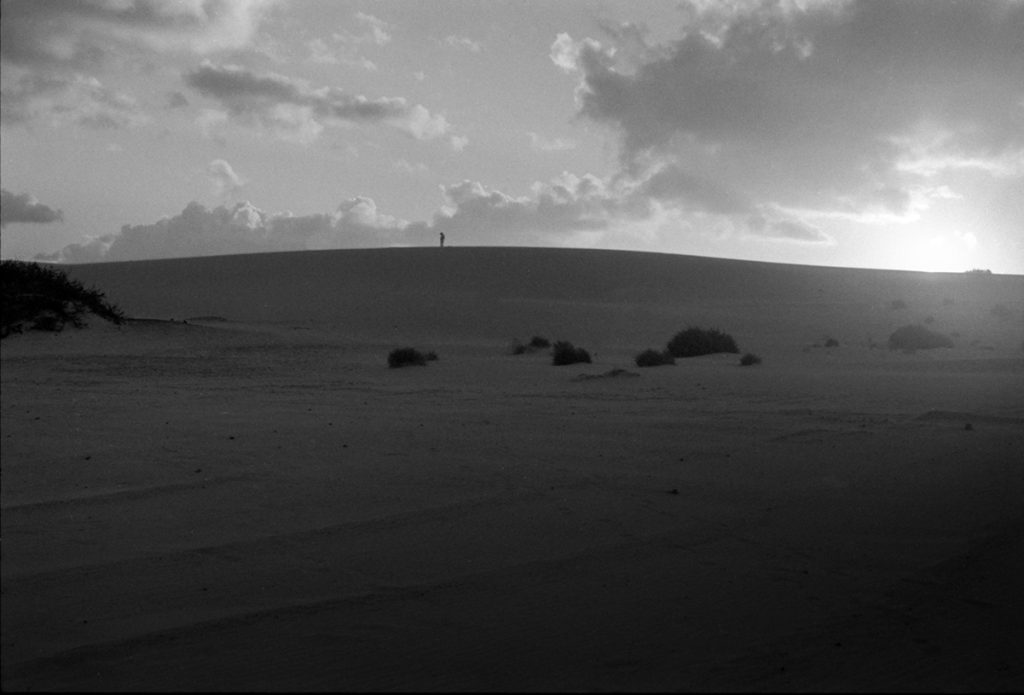
I didn’t miss the rest.