

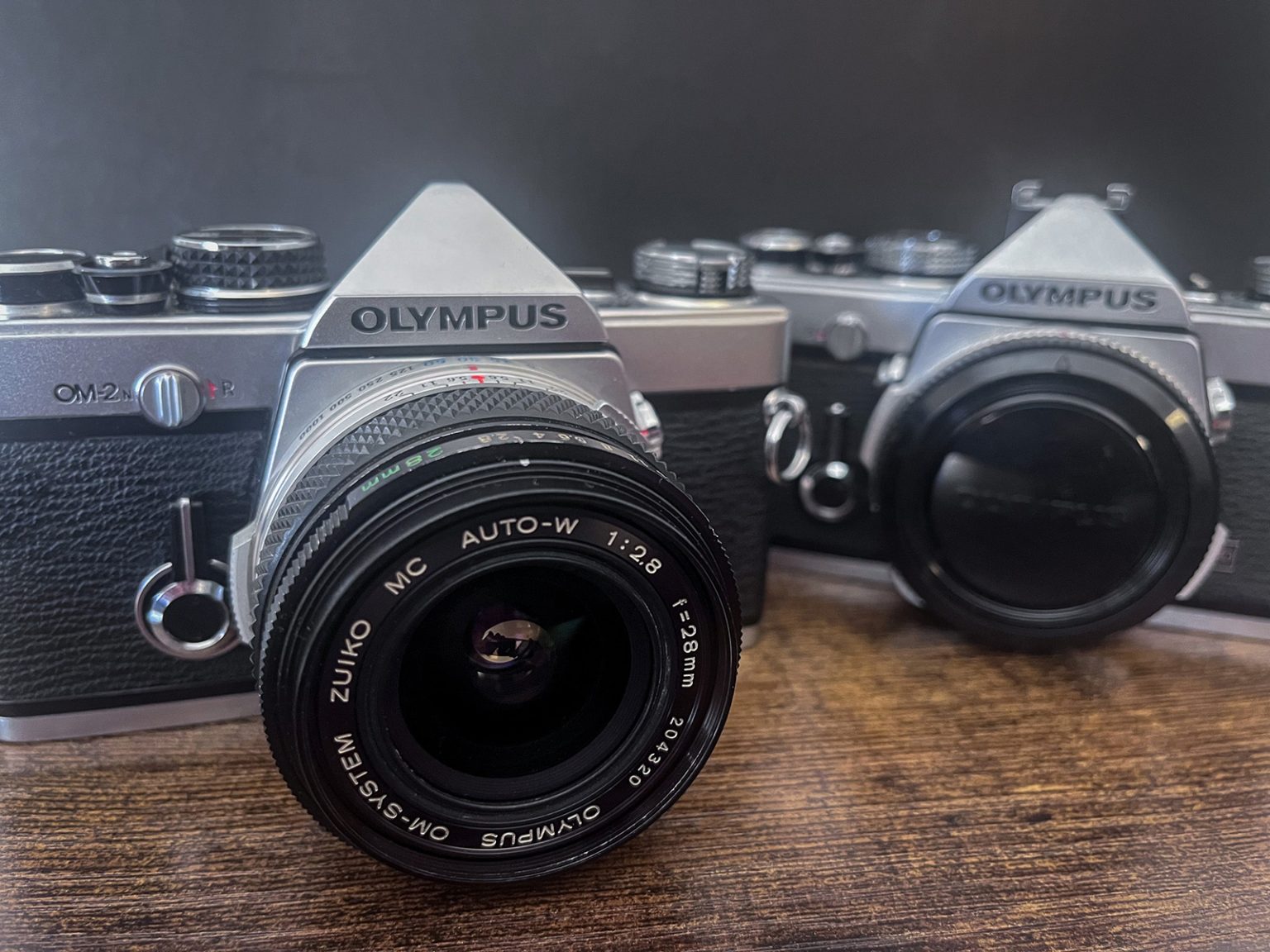
If you’re choosing between the Olympus OM-1 and the OM-2n, the decision is not really about specifications.
It is about how you want to shoot.
On paper, they sit close together. In practice, they feel quite different. Both are excellent cameras. Both can produce exactly the same kind of image. Both belong to the same superb Olympus OM system.
What separates them is not image quality. It is pace, handling, and the experience of using them.
The OM-1 is the more mechanical, deliberate camera. The OM-2n is the more flexible and practical one.
That is what actually matters.
Quick answer
Choose the Olympus OM-1 if you want:
- a fully mechanical camera
- full manual control
- a slower, more considered shooting experience
Choose the Olympus OM-2n if you want:
- aperture priority auto exposure
- faster shooting in changing light
- a camera that feels easier for everyday use
Neither is objectively better.
They just suit different kinds of photographers.
Olympus OM-1 vs OM-2n (Quick Comparison)
| Feature | Olympus OM-1 | Olympus OM-2n |
|---|---|---|
| Shooting style | Fully manual | Aperture priority (auto) |
| Pace | Slower, more deliberate | Faster, more fluid |
| Metering | Match needle | Automatic exposure (TTL) |
| Battery use | Meter only | Required for operation |
| Reliability feel | Mechanical simplicity | Electronic convenience |
| Best for | Intentional, considered shooting | Everyday, changing light |
The Olympus OM-1: simple, mechanical, deliberate
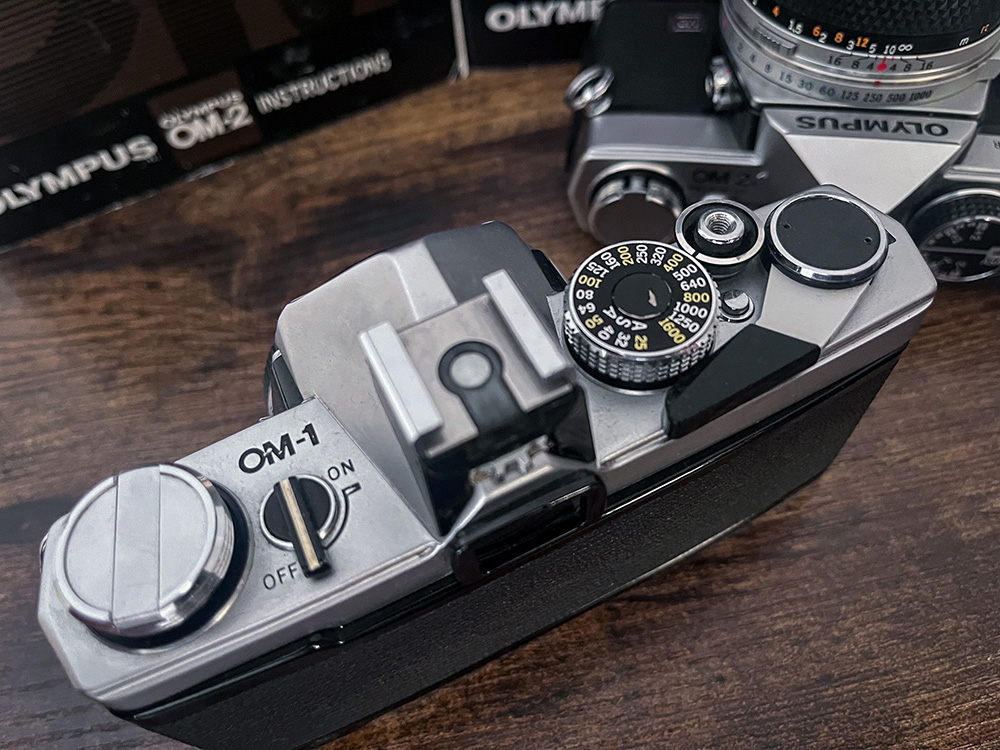
The OM-1 is fully mechanical apart from its light meter. That means the camera can still fire without a battery, and every exposure decision is yours.
You choose the shutter speed. You choose the aperture. You watch the meter. You make the call.
In use, that gives the OM-1 a very particular character. It feels direct, uncluttered, and focused. There is very little between you and the photograph.
That simplicity is part of its appeal. The OM-1 encourages you to slow down slightly, pay attention, and shoot with more intent. For some people that makes photography more enjoyable, not less.
It feels like a camera built around involvement.
The Olympus OM-2n: faster, easier, more fluid
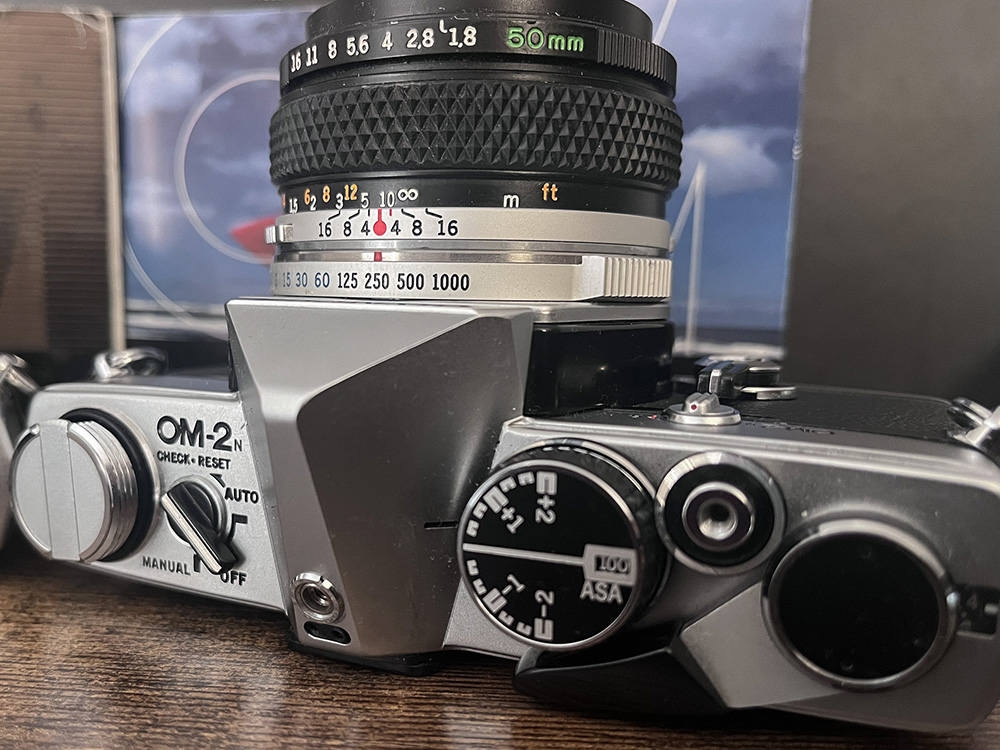
The OM-2n changes the experience by adding aperture priority auto exposure.
Instead of setting both aperture and shutter speed yourself, you set the aperture and the camera selects the shutter speed for you.
That single change makes a bigger difference than the spec sheet suggests.
In real use, the OM-2n feels quicker and more fluid. It is easier to work with when the light is changing, easier to use when you are moving around, and easier to trust when you want to concentrate on framing rather than constant exposure adjustments.
This is what makes the OM-2n such a strong everyday camera. It keeps the compact OM handling, but removes some of the friction.
You still feel involved. Just not slowed down by every shot.
Olympus OM-1 vs OM-2n in real use
This is where the gap between them becomes clear.
The OM-1 suits a slower rhythm. It feels more intentional and more hands-on. It is a better fit for photographers who enjoy the process as much as the result.
The OM-2n feels more responsive. It is easier on the move, easier in mixed or changing conditions, and generally easier to live with as an all-purpose film camera.
That does not make the OM-2n less serious. It just makes it more accommodating.
If the OM-1 asks you to stop and think, the OM-2n lets you keep flowing.
Metering differences
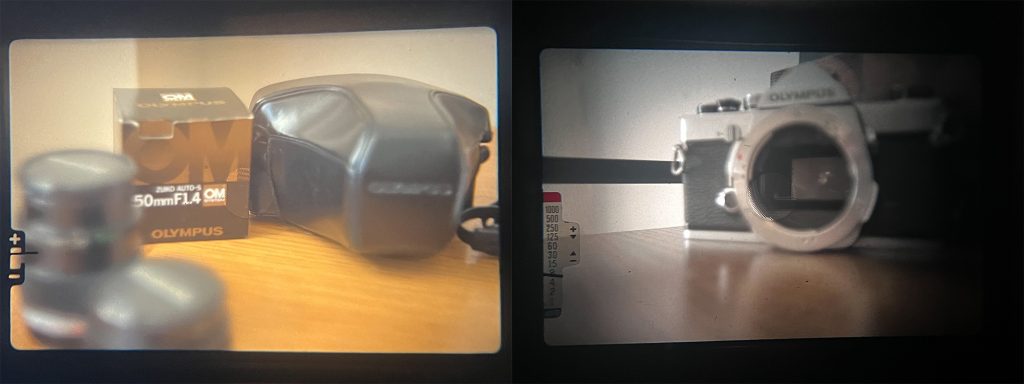
The OM-1 uses a match-needle meter. You adjust your settings and line up the needle yourself. It is simple, visual, and satisfying to use.
The OM-2n approaches things differently. In aperture priority mode, you choose the aperture and the camera handles the shutter speed automatically.
That removes a step from the shooting process, and in practical terms that is often the biggest difference between them.
With the OM-1, exposure feels more manual and more deliberate.
With the OM-2n, exposure feels faster and more seamless.
Reliability and practical ownership
The OM-1 has the advantage of mechanical independence. Apart from the meter, it does not rely on batteries to operate. That appeals to people who value simplicity, serviceability, and the reassurance of a mechanical camera.
The OM-2n is more electronically dependent. It is a more advanced camera, but also one that relies more heavily on its electronics and batteries to function properly.
For many people, that will not matter much in day-to-day use. But it is still part of the character of each camera.
The OM-1 feels simpler and more self-contained.
The OM-2n feels smarter and more convenient.
Which one should you choose?
Choose the Olympus OM-1 if you:
- enjoy manual exposure
- like mechanical cameras
- want a slower, more deliberate shooting process
Choose the Olympus OM-2n if you:
- want aperture priority
- shoot in changing light
- prefer speed, flexibility, and ease of use
If you are buying your first OM body and only plan to own one, the OM-2n usually makes more sense. It is simply more adaptable for everyday shooting.
But if what you love about film photography is the process itself, the OM-1 has a purity that is difficult to beat.
What I actually think
The OM-1 feels purer.
The OM-2n feels more practical.
That is the simplest honest summary I can give.
The OM-1 is the one you pick if you want the pleasure of doing it all yourself. The OM-2n is the one you pick if you want the camera to disappear a little more and help you work faster.
Neither choice is wrong.
It just depends on whether you want photography to feel more deliberate or more fluid.
Final thoughts
The Olympus OM-1 and OM-2n belong to the same system, use the same lenses, and are capable of the same image quality.
So this is not really a question of output.
It is a question of method.
Choose the OM-1 if you want a more mechanical, involved experience.
Choose the OM-2n if you want a more flexible and forgiving camera for real-world use.
That is what actually matters.
If the OM-1 is the direction you’re leaning, it’s worth understanding it properly. I’ve broken it down in detail here:
→ The Complete Olympus OM-1 Guide (Everything You Need to Know and More)