

By 1984, Olympus knew the future wasn’t just mechanical mastery — it was blending that mastery with real intelligence.
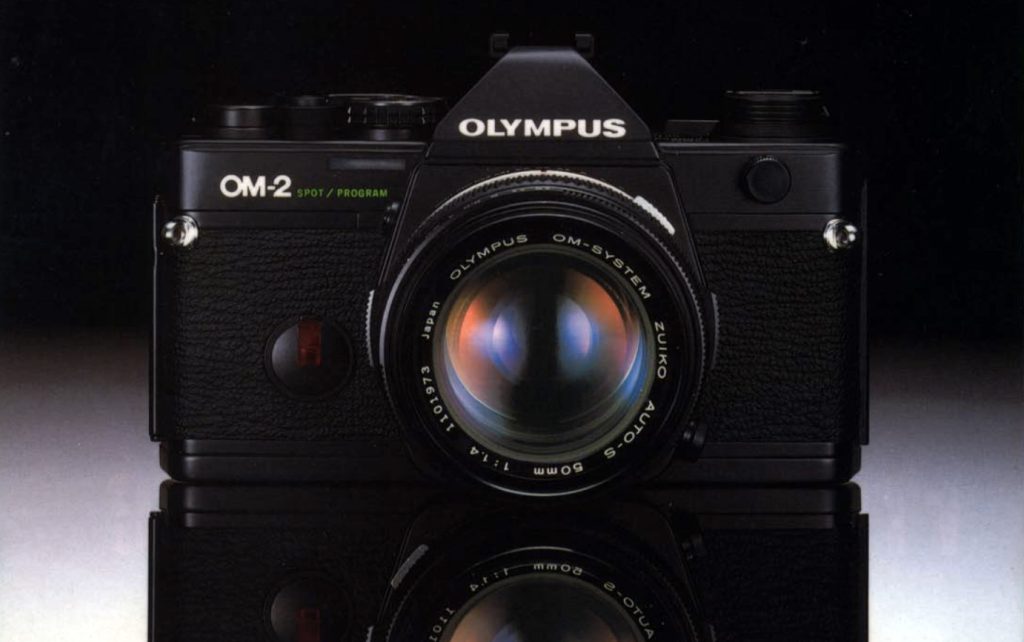
The Olympus OM-2 Spot Program (OM-2SP) was their answer.
It took everything photographers loved about the OM-2N —
then added spot metering, programmed autoexposure, and a more modernised core.
The OM-2SP kept the OM tradition alive —
but sharpened it for photographers who wanted precision at speed.
What Made the OM-2SP Different
The OM-2SP wasn’t just a facelift.
It was a full rethink of exposure control — built on three pillars:
- Traditional Aperture Priority:
Just like earlier OM-2 models — set your aperture, the camera selects shutter speed automatically. - Spot Metering Mode:
Instead of average metering, you could select a tiny 2% spot area dead centre —
perfect for critical exposures (think stage photography, backlit portraits, high-contrast scenes). - Program Mode:
A true fully automatic mode —
where the OM-2SP selected both aperture and shutter speed for you based on light levels.
For photographers who needed to shoot fast, react quickly, or simply trust the camera,
this was a genuine leap forward — without abandoning control.
Key Features of the OM-2SP
- Advanced Metering Modes:
Centre-weighted averaging, 2% Spot Metering, and Program Mode selectable. - TTL Flash Metering:
Fully supports Olympus T-series flashes (especially T32) with through-the-lens flash exposure. - Quartz-Timed Shutter:
Electronically controlled for precise timings from 60 seconds to 1/1000s. - Mechanical Backup Speeds:
If the batteries fail, the OM-2SP still fires at 1/60s and Bulb — same as earlier OM-2 models. - Motor Drive Ready:
Built-in compatibility with Olympus Motor Drive 2. - Dedicated LCD Display:
In the viewfinder — shows metering mode, selected shutter speed, flash status, battery warnings. - Battery Use:
Requires two SR44 (or equivalent) batteries.
No battery = mechanical speeds only.
Design Changes from the OM-2N
- Sharper Angular Styling:
Gone is the soft OM-1/OM-2 curve — replaced by a slightly more modern, squared-off design. - Viewfinder LCD:
Replaces part of the traditional needle-style meter display with an illuminated shutter speed readout. - More Electronic Reliance:
The OM-2SP needs batteries for almost everything — more so than earlier OM-2s.
(Bulb and 1/60s mechanical backups remain.) - Program Exposure:
A true auto-everything mode added, alongside aperture-priority and spot-metered manual exposures.
How to Estimate the Age of Your OM-2SP
| Serial Number Range | Approximate Production Years |
|---|---|
| 100000 – 300000 | OM-2SP |
The OM-2SP was produced in smaller quantities compared to the OM-2N —
making it rarer on the used market today.
Serial Location:
- On the top plate near the rewind crank.
Olympus OM-2SP: Full Specifications
| Specification | Detail |
|---|---|
| Year Released | 1984 |
| Shutter Speeds | 1s – 1/1000s (Auto: 60s–1/1000s), Bulb |
| Flash Sync | 1/60s |
| Metering Modes | Centre-Weighted, Spot (2%), Program |
| Exposure Modes | Manual, Aperture Priority Auto, Program |
| TTL Flash | Supported |
| Viewfinder | LCD display with metering indicators |
| Motor Drive Compatible | Yes (Motor Drive 2) |
| Battery | Two 1.5V SR44 or one 3V CR1/3N |
| Mechanical Backup | 1/60s and Bulb |
| Build Material | Magnesium alloy frame with updated finish |
Brochures and Manuals for Download
Final Word
The OM-2SP is a bridge between eras.
It retains the OM system’s core virtues —
compact size, smart control layout, legendary optics —
but brings a level of metering sophistication few mechanical cameras ever achieved.
If you want an OM body that thinks with you — without getting in the way —
the OM-2SP remains one of Olympus’s finest achievements.
Smart where it matters.
Simple when you need it.
Built to keep shooting.