

I didn’t buy this Olympus OM-10 because I needed another OM body.
I bought it because I spotted a 50mm f/1.4 clinging to a badly written eBay listing and recognised the familiar danger: something valuable hiding in plain sight. Forty-two pounds and fifty pence later, a box arrived containing fungus, dead light seals, a Quartz Data Back nobody likes to admit owning, and a camera that had clearly been left alone for a very long time.
After cleaning it properly and replacing what time had reduced to sticky foam, there was only one honest thing left to do.
Load a roll.
Leave everything as it was.
And take it out into the world.
So I did – HP5 in the body, fungus-ridden 50mm still attached – and took it with me on a day trip to the Isle of Wight to test.
A Camera With No Performance Anxiety
Cheap cameras remove the imaginary audience.
There’s no sense you’re making work.
No pressure to justify the frame.
No voice asking whether this would survive later scrutiny.
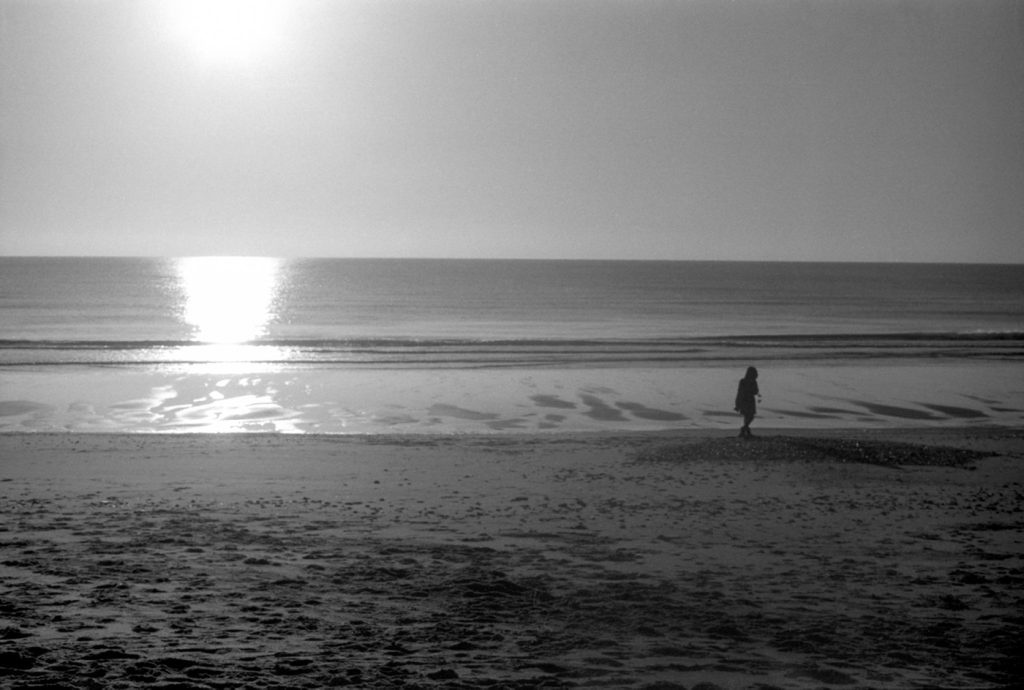
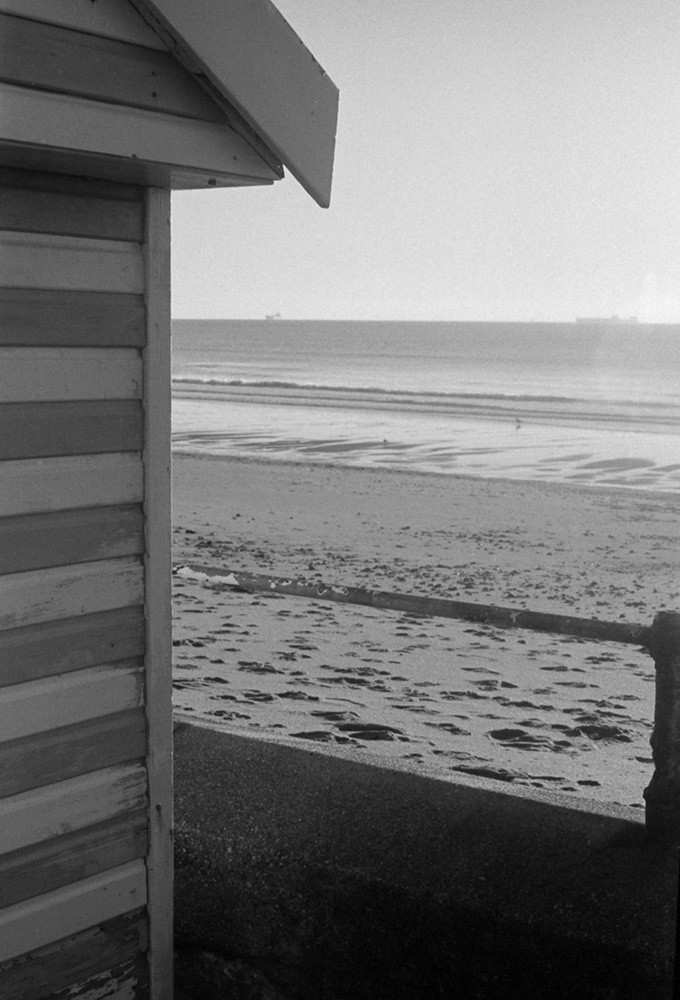
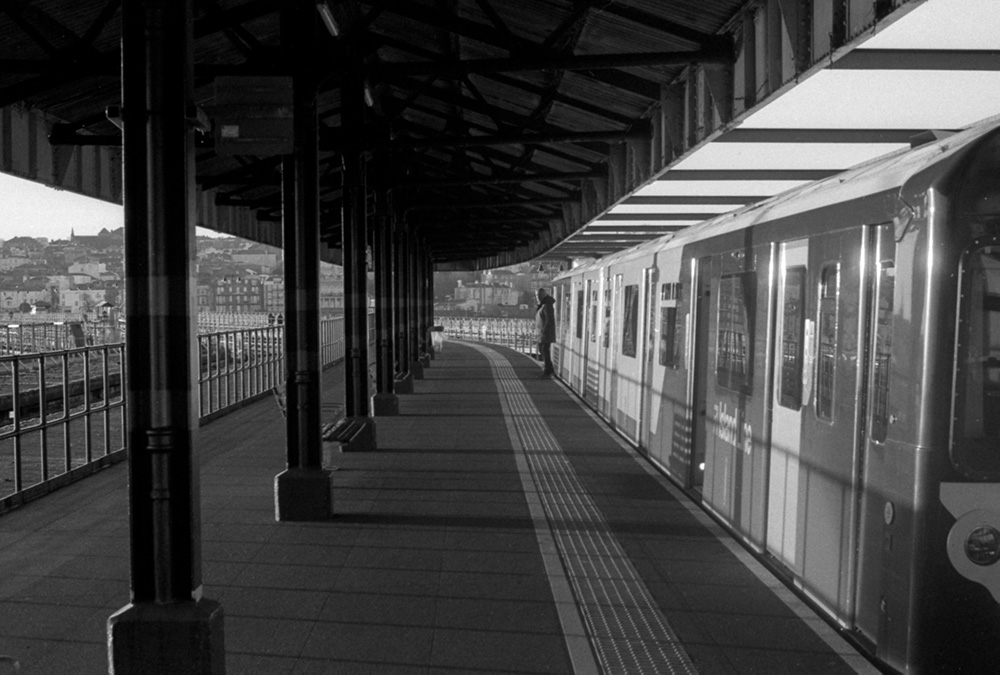
If something caught my eye, I photographed it. If it didn’t, I didn’t. Platforms, ferries, buildings, shoreline, light slipping across water – nothing dramatic, nothing designed to impress. Just the ordinary visual rhythm of being somewhere for the day.
That absence of pressure matters more than most people realise.
Expensive cameras encourage performance.
Clean cameras encourage caution.
This OM-10 encouraged neither.

The Weight, the Sound, the Feel
This OM-10 feels different to my other OM-10s.
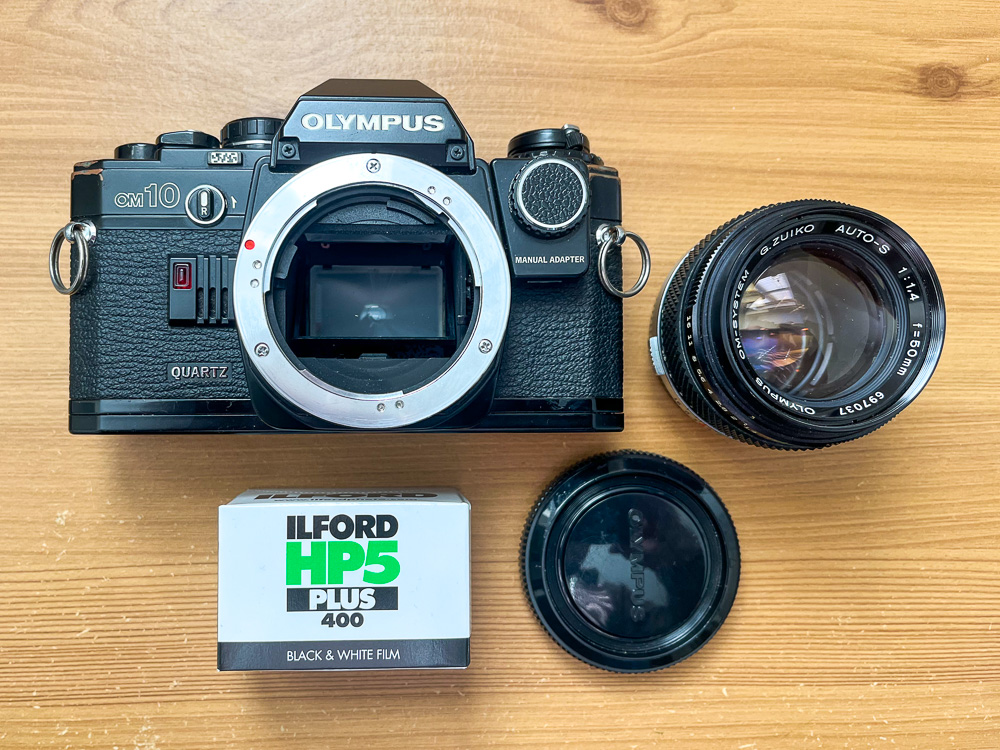
Part of that is literal. The Quartz Data Back – usually removed on principle – adds just enough weight to change the balance. It grounds the camera slightly, gives it a sense of density that many OM-10s lack.
And then there’s the shutter.
Some OM-10s sound thin, almost apologetic. This one doesn’t. The shutter has a composed, confident note to it – not loud, not muted, just assured. It sounds like a camera that expects to be used rather than handled carefully.
Even the data back behaved itself. I didn’t use it to vandalise negatives with dates – absolutely not – but as a clock. A small, practical detail while waiting for ferries and trains. An accessory built for the wrong idea ended up being quietly useful.
Black Paint, Brass Showing Through
Then there’s the brassing.
Black Olympus bodies wear beautifully when they’re allowed to age honestly. The edges soften. The corners glow faintly gold where the paint has given up. Not abuse – use.
This OM-10 isn’t pristine, and that’s exactly why I like it. The brassing tells you it’s been handled, carried, trusted. It removes any temptation to treat the camera as an object rather than a tool.
Brassing lowers the stakes.
Lower stakes improve photography.
You stop protecting. You start looking.
The Lens Everyone Would Dismiss
The 50mm f/1.4 is objectively compromised.
The fungus is internal, well established, and not interested in leaving. Wide open, the lens shows it – lower contrast, a softness that reminds you why people panic when they shine a torch through old glass.
So I didn’t shoot it wide open.
Most frames landed between f/2.8 and f/8, and something quietly reassuring happened. The lens behaved. Sharp where it needed to be. Enough contrast to hold form. No collapse, no drama, no visual apology.
Is there anything spectacular here?
No.
And that’s the point.
This roll wasn’t about brilliance. It was about whether a lens most people would bin could still make honest photographs when used sensibly.
It could.
HP5 didn’t mind.
Neither did I.
When the Camera Gets Out of the Way
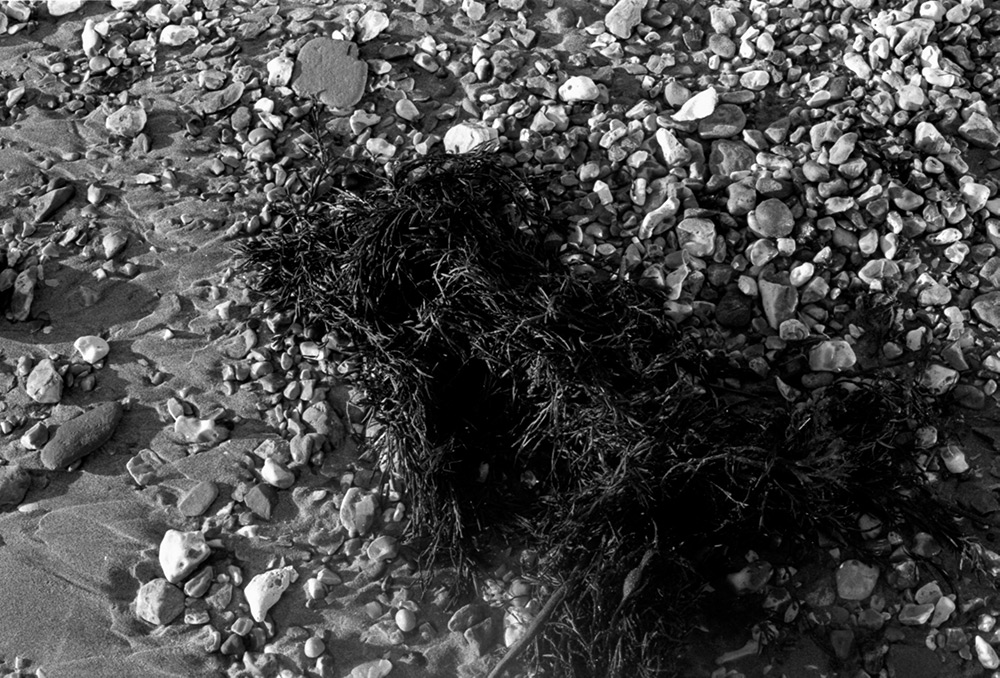
As the roll went on, the OM-10 disappeared.
That’s always the tell.
When you stop listening to the shutter, stop watching the meter, stop waiting for something to fail, the camera has done its job. It steps aside and leaves you alone with what’s in front of you.
By the end of the day, this no longer felt like a test roll. It felt like photography – attentive, unforced, and slightly forgetful of itself.
That feeling has repeated itself every time I’ve loaded it since.
The Surprise I Didn’t Plan For
Of all the Olympus OM bodies I own – including the OM-1 and OM-2 – this is the one that feels right.
Not because it’s better. Not because it’s cleaner. Not because it wins on paper.
I didn’t notice it immediately. It happened gradually, over repeated outings, when I realised this was the camera I kept reaching for without thinking. The one that ended up in the bag by default. The one I didn’t negotiate with before leaving the house.
It doesn’t demand care or reward discipline. It simply accepts whatever attention I give it and returns something usable every time.
At this point – after different days, different light, and more than one roll – it’s still the OM I trust most.
That may change. Cameras reshuffle themselves over time.
But some first impressions don’t fade. They settle.
What the Negatives Confirmed
The negatives were unremarkable in the best possible way.
No light leaks.
No exposure surprises.
No erratic behaviour.
Just negatives that confirmed what repeated use had already suggested: the camera works, and it works calmly.
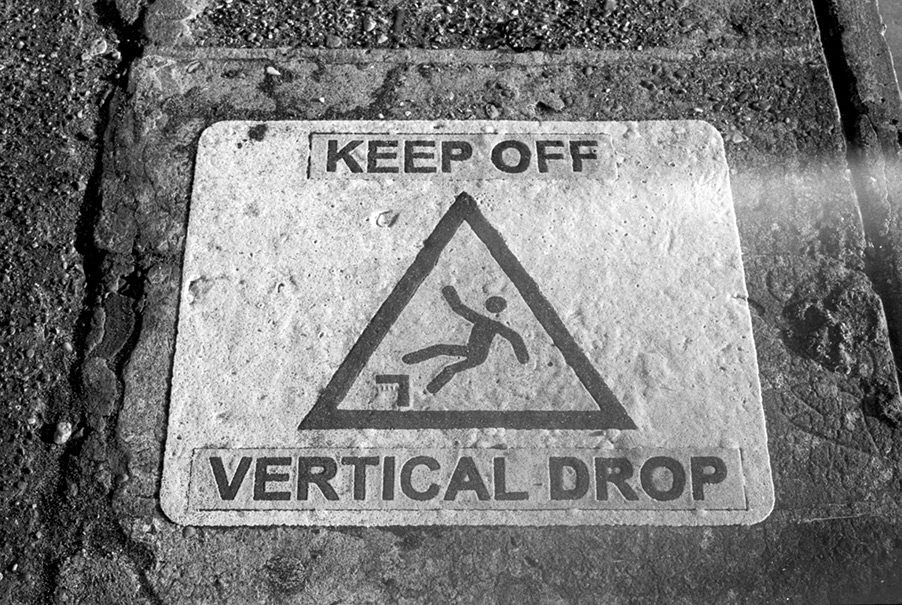
The images shown here are straight scans from the negatives, presented as they are. They don’t need explaining or defending. They show a forty-year-old camera doing exactly what Olympus built it to do, long after anyone expected it to.
What £42.50 Actually Bought
It didn’t buy perfection.
It didn’t buy a lens worth saving.
It didn’t buy anything impressive.
What it bought was a camera with no ego.
A camera I don’t negotiate with.
A camera I don’t justify.
A camera that lets me look without commentary.
The cheapest cameras often carry the least pressure.
And sometimes the ones you buy for the wrong reason quietly become the ones you trust most.
Part One: Where This Camera Came From
This OM Story is Part Two of a longer journey.
If you want the full context – the original eBay listing, the fungus reveal, the dead seals, the questionable accessories, and the reality of what £42.50 actually buys you online – that story lives elsewhere on Zuikography.
This piece only exists because of that one.
Read Part One: What £42.50 Buys You on eBay – An Honest OM10 Autopsy