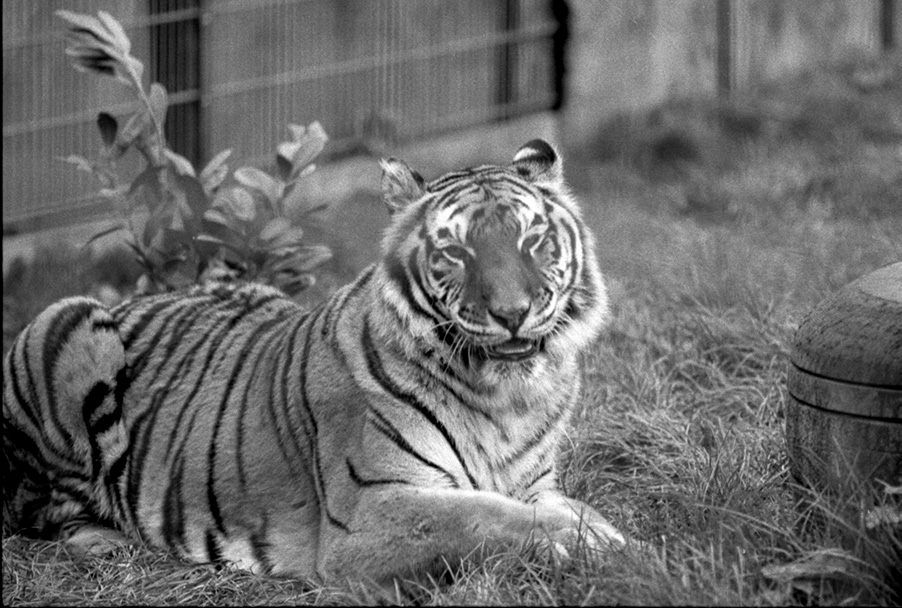
Wildheart isn’t a place you rush.
It sits quietly off the mainland on the Isle of Wight, and it has a way of slowing you down whether you intend it to or not. The animals here are rescued. They aren’t arranged, prompted, or encouraged to perform. They’re simply living out their lives with care, space, and time — and it doesn’t take long before that affects how you behave with a camera.
I’ve grown fond of the place for exactly that reason.
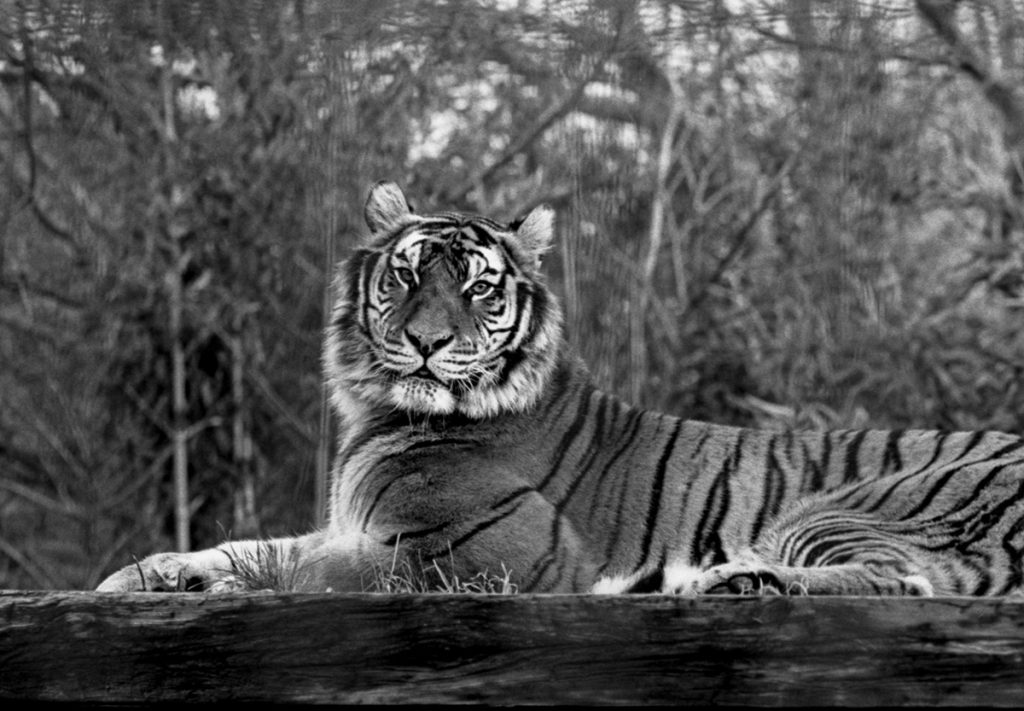
This visit was in early December. Cold, wet, and windy. I had thermals on, a woolly hat, waterproofs, hand warmers in my pockets, and tea in a flask — enough to keep me there, though not enough to make it feel like a particularly sensible decision.
I brought an Olympus OM-40, a Zuiko 200mm, and a few rolls of black-and-white film. All in, the kit cost about £45 — a faintly ridiculous figure to mention while standing a few metres from a tiger. Still, it’s worth saying, because it becomes clear very quickly how little this kind of photography depends on equipment.
What matters far more is attention. And restraint. And knowing when not to take a photograph.
An Unlikely Favourite
I also brought an OM-2 with me.
It stayed in the bag.
The OM-40 was only meant to be used for a test roll. I liked it more than I expected, and just kept going with it.
It isn’t an OM-1, and it doesn’t have the authority people often associate with the OM-2. It sits slightly to one side of Olympus history — overlooked, unfashionable, and rarely anyone’s first choice. And yet, it gets on with things in a way that feels quietly dependable.
I shot manually all day. Partly out of habit, partly because the OM-40 encourages it. The viewfinder display gives you just enough information to be useful without becoming distracting. The camera never tried to be clever. It simply worked, then waited.
That suited the place.
Film, Light, and Small Decisions
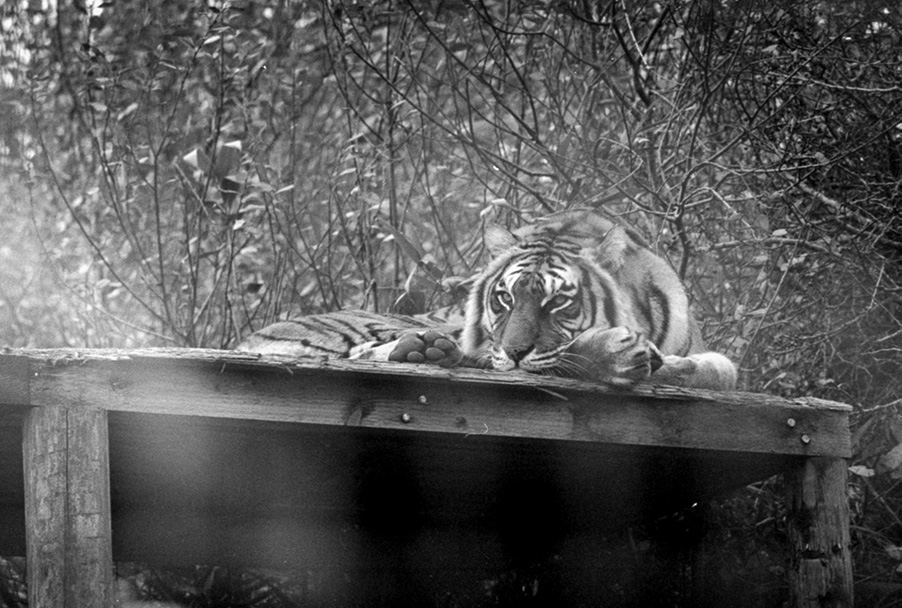
The Zuiko 200mm stayed wide open throughout the day. There was no real reason to stop it down. Depth of field was thin, backgrounds fell away cleanly, and shutter speeds stayed workable without fuss.
For most of the visit I shot Tri-X at box speed. It’s predictable in the best sense — tolerant, flexible, and well suited to stillness. Later in the afternoon, as the light dropped, I switched to HP5 rated at 1600. Not for effect, and not to chase grain, but simply to keep the shutter speed sensible when movement did happen.
The grain arrived anyway, as it always does, and felt right for the place.
Tigers: Learning to Stay Still
Tigers don’t reward urgency.
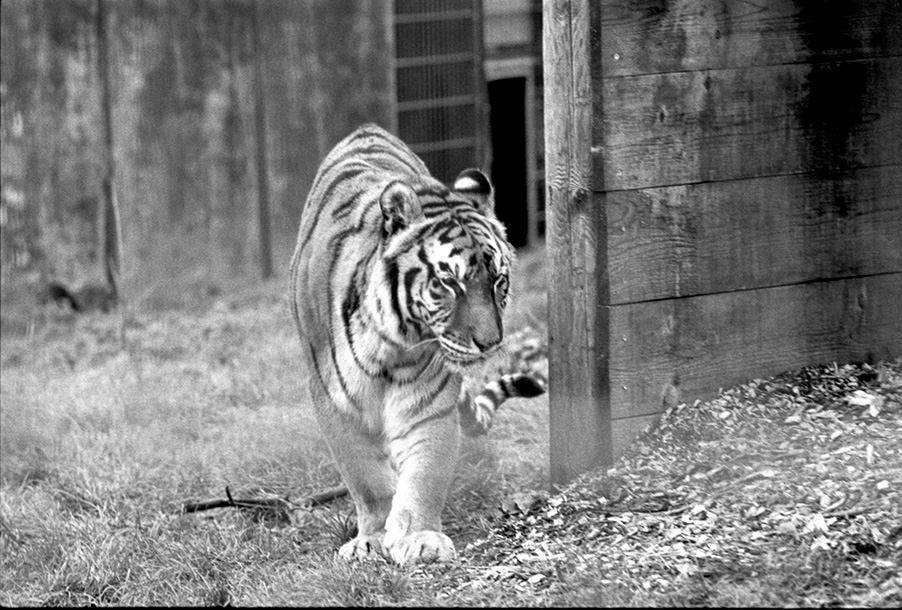
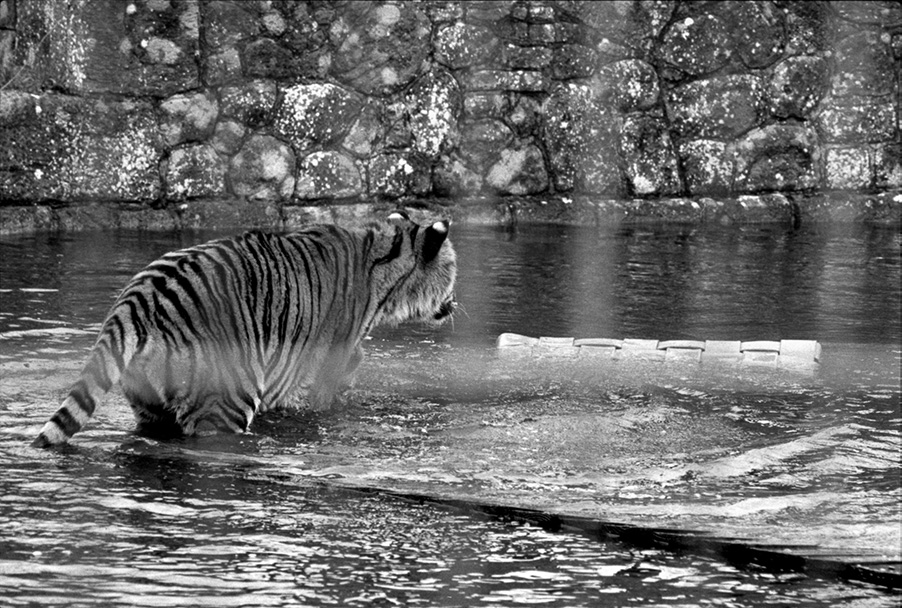
Most of the photographs I made were static, and that was deliberate. Manual focus is easier when nothing dramatic is happening, and tigers are very good at staying still for long periods. You stop reacting and start anticipating.
You settle. You notice breathing, small movements, the slow shift of weight. Time stretches. You stop thinking in moments and start thinking in duration — how long they’ve been resting, how long you’re prepared to wait, and whether the two might ever overlap.
When movement did happen, I didn’t chase it. I refocused, chose the frame, and waited for the animal to enter it. That felt calmer, more respectful, and far more reliable. The camera stayed ready. The tiger decided when the photograph existed.
Film suits that way of working. You commit to a position and trust your timing.
The Long-Lens Question
There’s a familiar scene at places like this. Long lenses, heavy tripods, and cameras firing in long bursts. Thousands of frames taken in the hope that one will rise above the rest.
Often the aim is the same: blur the bars, remove the enclosure, erase the context. The longest lens available is used not just to get closer, but to suggest a closeness that isn’t really there.
I understand the impulse. It just isn’t what I’m interested in.
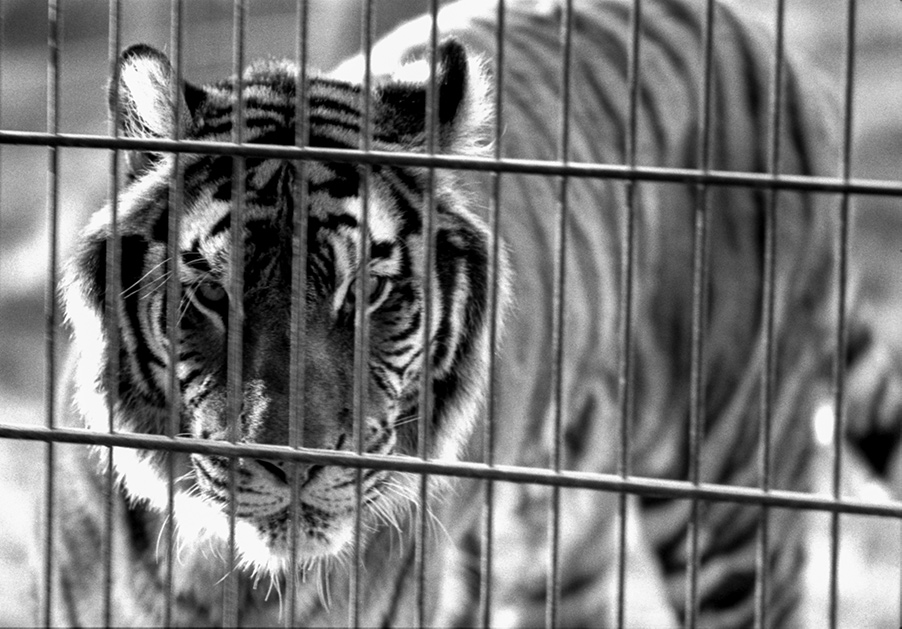
The enclosure is part of the story. These animals are here because they were rescued — some from circuses, others intercepted before being sold into lives best left unexamined. The structures that keep them safe belong in the photograph as much as the animals themselves.
The fencing remains in the frame. It’s part of the reality of the place.
Anything else starts to feel like decoration.
Movement, When It Comes
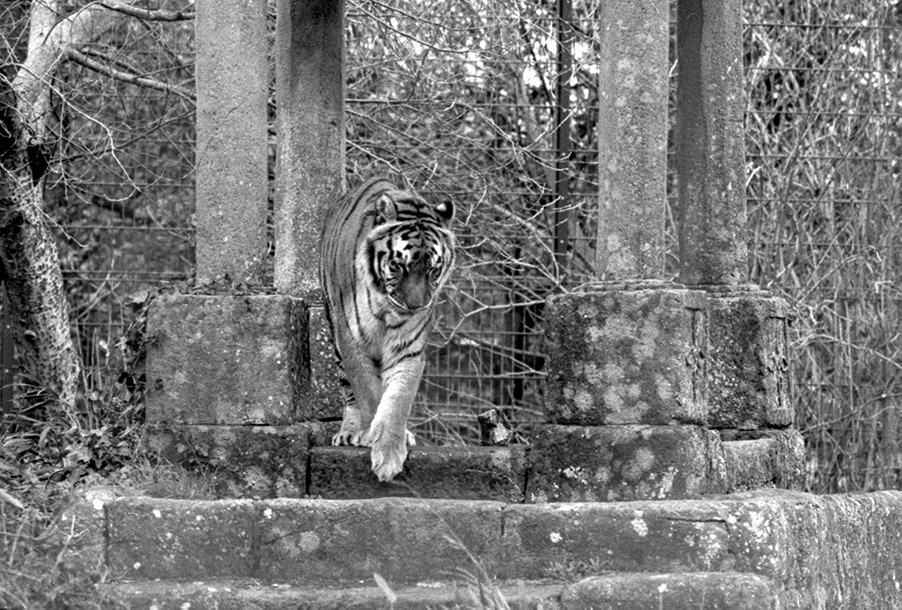
When a tiger does move, it does so without warning and without the slightest concern for your settings.
This is where the OM-40 continued to impress me. No hesitation. No confusion. I refocused, waited, and allowed the animal to move through the frame. At 200mm, wide open, the margin for error is narrow — which makes the frames that work feel earned rather than lucky.
You don’t need many. A few are enough.
And Lions Too
Wildheart isn’t only about tigers.
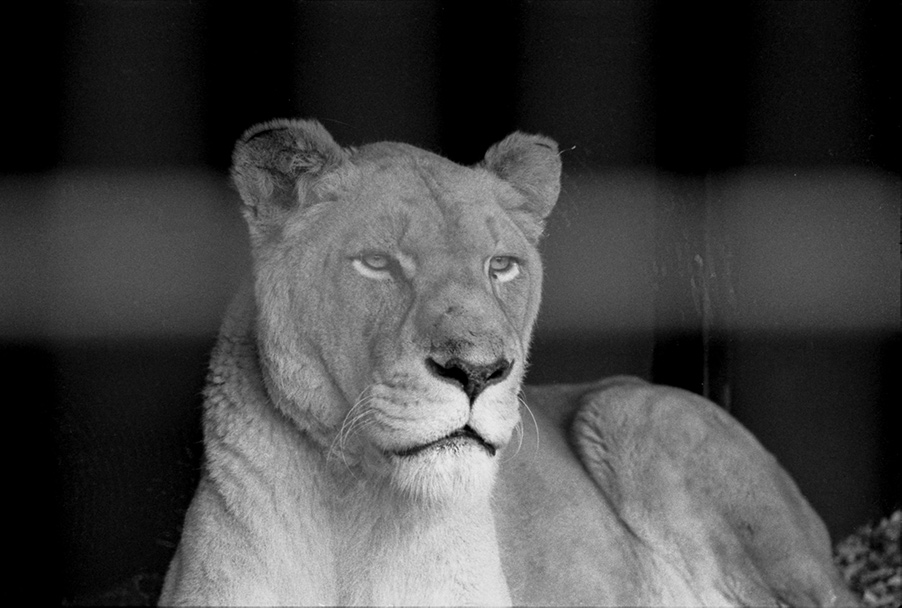
Lions feel different. Less watchful, more settled. Where tigers often seem inward and contained, lions appear comfortable simply being where they are.
I photographed them in the same way. Manual focus. Slow movement. Waiting rather than prompting. As the light faded, HP5 carried on doing what it does best, accepting the conditions without complaint while shutter speeds stayed workable.
The photographs don’t shout. They don’t need to.
Final Thoughts
The OM-40 wasn’t supposed to be the camera I enjoyed most that day. But it was.
The OM-2 stayed in the bag. The OM-40 stayed in my hands. That feels like praise enough, particularly for a camera that rarely gets invited to this sort of work.
Tri-X and HP5 behaved exactly as you hope they will — tolerant of imperfect light, responsive to change, and quietly rewarding of patience. Shooting wide open, manually focused, and largely static felt right for the place and the subjects.
More than that, it felt respectful.
There is something quietly powerful about being in the presence of animals who have endured what they have and continue to live with dignity. Zoppa’s limp is always there, never hidden — a reminder of a past that can’t be undone, only acknowledged. She doesn’t perform now. She doesn’t have to.
Being there isn’t about extracting images. It’s about paying attention, keeping your distance, and allowing the animals to exist on their own terms.
For a place like Wildheart Animal Sanctuary, that feels like the only way to do it properly.
And sometimes, that is enough.