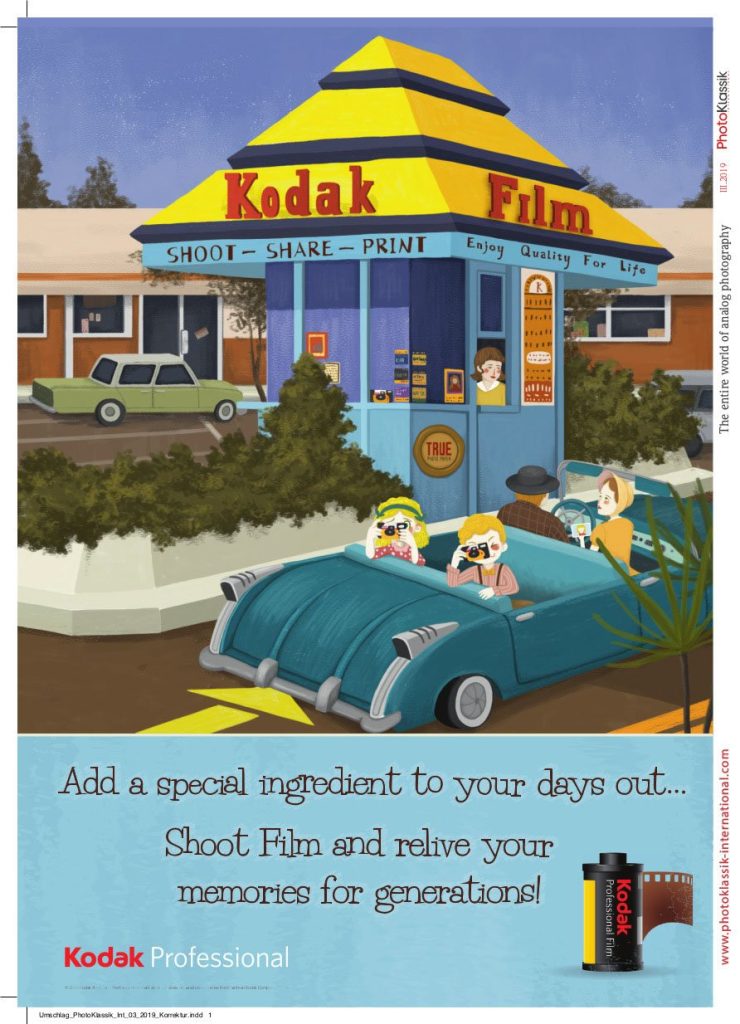
It’s difficult to overstate how much Kodak once meant to the world. For much of the 20th century, if you were photographing anything – from a moon landing to your Aunt Sheila’s third wedding – it was probably on Kodak film. Weddings, holidays, riots, revolutions, Elvis, the moon, and your mum’s bad 1980s perm – all caught on those familiar yellow boxes. Kodak was photography.
And then, quite suddenly, it wasn’t.
This is a tale of golden empires, spectacular blunders, chemical magic, digital denial, and a phoenix-like resurrection no one quite expected. It’s also a love letter to grain, to Tri-X, and to those slightly smug moments in the darkroom when you realise: yes, film is still alive – and Kodak, for better or worse, is still part of the story.
Prefer your history with dramatic music and American voiceovers?
If you fancy a deeper dive, the excellent 47-minute documentary by FD Finance – linked above – lays out Kodak’s meteoric rise and Shakespearean collapse in gripping detail. It’s packed with boardroom blunders, bold predictions, and just the right amount of corporate chaos. Worth a watch – ideally with a cuppa and a biscuit.
Now, let’s wind the reel back and begin with how it all started.
Kodak Early Days
Kodak began in the late 1800s, when George Eastman – a man who looked like he’d never smiled in his life – decided photography should be as easy as making toast. Before Eastman, photography involved explosive chemicals, tripods the size of lamp posts and a level of patience most of us now reserve for waiting for software updates.
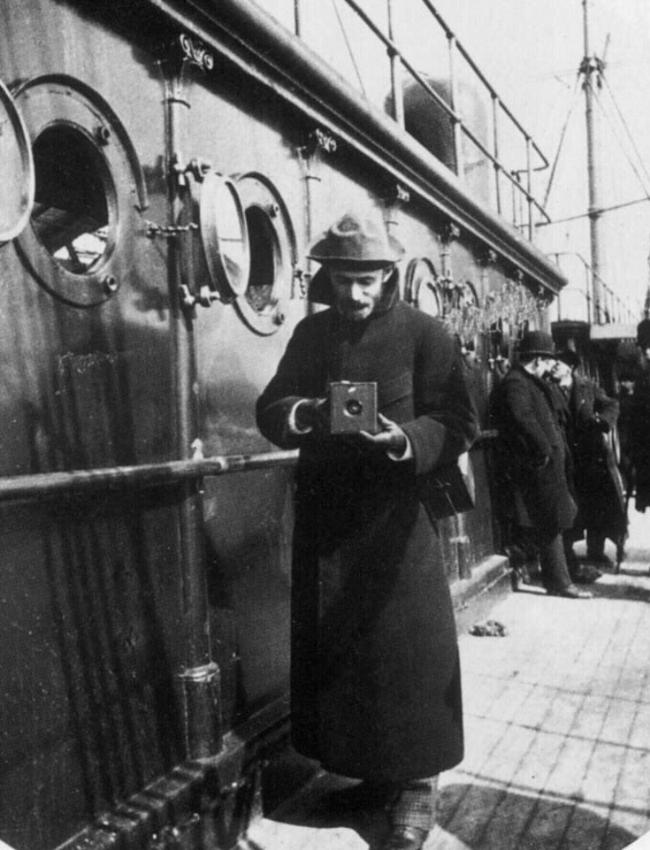
Eastman’s breakthrough was simple genius: pre-loaded, roll-based film cameras that anyone could use. His 1888 slogan You press the button, we do the rest, could’ve been written by Steve Jobs. Except Eastman meant it literally – you posted the whole camera back, and Kodak did everything for you. Developing. Printing. Reloading. The works.
By 1900, the Kodak Brownie was the iPhone of its day. Affordable, portable, and wildly addictive. Your nan probably had one. Everyone did. And Kodak? It printed money. Quite literally, in some cases.
The Empire That Shot the World
Through the 20th century, Kodak didn’t just dominate photography – it was photography. They produced the film, the cameras, the paper, the chemicals, and the glossy ads with fresh-faced American families leaping off piers in matching sweaters. They even had a monopoly so strong it made Standard Oil look like a corner shop.
They also pioneered motion picture film. Every Oscar-winning epic from Casablanca to The Godfather was shot on Kodak stock. And when humans finally went to the moon in 1969, guess whose film they took?
(Kodak. Not Fuji. Never Fuji.)
By the 1970s, Kodak had 90% of the film market in the U.S. and a similar stranglehold elsewhere. At its peak, Kodak employed over 145,000 people and was one of the most recognisable brands on Earth.
They were, to borrow a Britishism, absolutely rolling in it.
The Digital Elephant in the Darkroom
And then, they invented their own downfall.
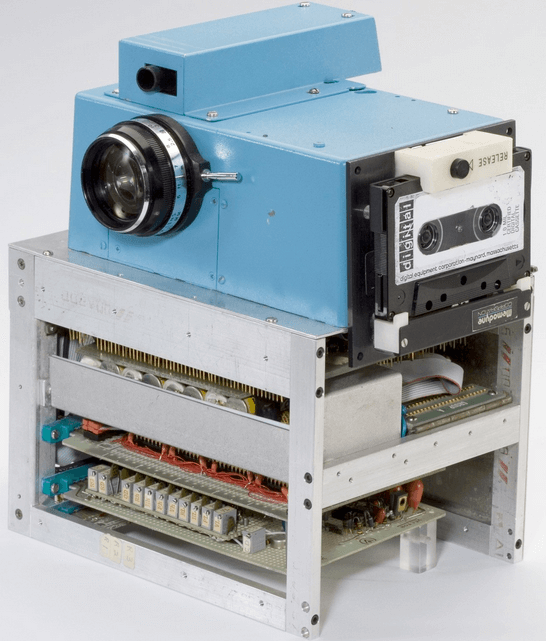
This is not a metaphor. In 1975, Kodak engineer Steve Sasson built the first digital camera. It looked like a toaster with a lens and recorded 0.01 megapixel black-and-white images onto cassette tape. It was, to quote Sasson himself, bit rubbish – but it worked.
Kodak, in its infinite wisdom, responded like a Victorian aristocrat being asked to eat a Pot Noodle: they were vaguely curious, politely horrified, and then dismissed it entirely.
Because Kodak knew their empire was built on selling film. No film, no cash. And so, rather than embrace the technology they’d created, they buried it. For decades. The irony is Shakespearean.
Fast forward to the late 90s and the digital camera boom had begun. Kodak tried to catch up, launching early digital compacts (including some decent collaborations with Canon and Nikon). But it was too late. Their business model – based on people using more film than toilet paper – was crumbling faster than a Rich Tea biscuit in a hot brew.
From Glory to Bankruptcy
By 2012, Kodak filed for Chapter 11 bankruptcy. This was the company that invented the consumer camera and had once been richer than McDonald’s and Nike combined. Now they were flogging patents and office chairs.
To make matters worse, they had sold off key divisions – like their profitable chemicals and healthcare imaging arms – to stay afloat. It was like selling your central heating so you could buy more winter jumpers.
The decline was brutal. Kodak became the poster child for corporate complacency, often held up in business textbooks alongside Blockbuster and MySpace as a masterclass in how to spectacularly fumble the future.
Tri-X and the Ghosts That Refuse to Die
And yet – Kodak didn’t die.
Against all odds (and business logic), Kodak Film lives on. In fact, it’s thriving in its own peculiar way. The recent resurgence of film photography has seen Kodak’s name regain some of its old swagger, particularly among a younger generation raised on megapixels and Instagram filters but now obsessed with grain, imperfection, and analogue cool.
The real star here is Tri-X 400. If Kodak were a band, Tri-X would be their greatest hit, played on loop at every gig. Introduced in 1954, Tri-X has that perfect combination of grit, contrast, and subtlety that no filter can replicate. It was the film of choice for war photographers, jazz album covers, fashion shoots, and street snappers. It still is.
Shoot a roll of Tri-X today and you can feel the ghosts of Cartier-Bresson, Jane Bown, and Don McCullin in your fingertips.
It’s the kind of film that doesn’t just capture a moment – it feels like one.

Kodak Today: A Weird, Wobbly Survivor
So what does Kodak do now?
Well, it’s complicated. There’s still Kodak Alaris, who handle film production and consumer products (including film scanners and photo booths in depressing supermarkets). Then there’s Eastman Kodak, the parent company, which now dabbles in commercial printing, packaging, and other vaguely industrial things nobody fully understands.
At one point, they even tried launching a Kodak-branded cryptocurrency. Yes. Really. It lasted about as long as a roll of 110 film.
Yet, remarkably, Kodak film continues. Colour stocks like Portra and Ektar are more popular than ever (albeit more expensive than a round of drinks in Soho). They’ve even re-released Ektachrome, which is a bit like David Bowie coming back from the dead and releasing a new album on cassette.
Kodak is no longer a tech titan. But it is – somehow – a cultural brand again.
Final Frame: What Kodak Still Means
Kodak’s story is both a cautionary tale and a reminder of how hard it is to kill a good idea. They may have missed the digital boat (and then set fire to the dock), but they created something that transcended business.
They gave us a way to see the world. A way to preserve it. A way to remember who we were.
And even now, in an age of AI selfies and 4K drone footage, there’s still something magical about loading a roll of Tri-X into your camera, stepping into the light, and pressing that shutter.
Because as George Eastman might’ve said, in that no-nonsense way of his: you press the button, and the story begins.